




Last updated: November 20, 2026
Quick Answer: if water got into the container and touched the product, discard the face mask; if only the outside got wet, wipe the jar, dry it, and keep it only if the product stayed dry. For how to handle face masks after water gets in the container, the rule is simple: water inside the jar is a contamination risk, while water on the outside is usually a cleanup issue.
Key takeaways
- Water in a face mask jar is a contamination problem, not just a storage problem.
- If the mask itself got wet, discard it unless a manufacturer or qualified professional gives a different instruction.
- Wet fingers and reused spatulas can spread bathroom moisture into the jar.
- A clean wipe-down of the outside is not enough if water reached the product.
- Bathrooms are a bad place for open jars because humidity keeps the risk going.
What should I do first?
Start by stopping use of the jar and checking whether the water touched the mask itself. If the product got wet, treat the container as contaminated and, if needed, consult a professional or the manufacturer about disposal.
That sounds blunt, but it is the cleanest answer for a face mask jar. Once water enters an open jar, you no longer know what got into the product, and bathroom humidity can keep feeding the problem. The same logic applies if the lid was left open near a sink, shower, or wet counter for even a short time.
Use this quick order of operations:
- Move the jar away from the bathroom sink or shower area. Put it on a dry counter or shelf so no more splashes reach it.
- Look at the product, not just the lid. If you can see water beads, streaks, swirls, or a softened top layer, assume the face mask itself was exposed.
- Check for wet tools. If a spatula, scoop, or finger touched water and then entered the jar, the product is no longer clean.
- If the product is dry and untouched, wipe the outside. Use a dry tissue or clean cloth for the jar rim and exterior only.
- If the product got wet, discard it. Do not scoop off the top and keep the rest. That leaves the problem behind.
A face mask jar is not like a sealed bottle. The wide opening makes it easy for water droplets, steam, and wet hands to reach the contents. In practice, that means the product stays only if the water stayed outside.
For more on keeping open jars dry, see the face mask storage guide and bathroom skincare safety tips.
How do I tell if the jar is contaminated?
A face mask jar is contaminated if water, wet fingers, or a damp spatula entered the product container. The jar itself may look fine while the product is already unsafe to keep.
The most common trap is thinking, “It was just a little splash.” With face masks, a little splash is enough when it lands inside an open jar. Bathroom humidity matters too, because it keeps surfaces damp long after the shower or sink is turned off. A jar left open near a mirror or basin is exposed even if no one sees a drop hit it.
Use the table below to sort the situation fast.
| What happened | What it means | What to do |
|---|---|---|
| Water only hit the outside of the jar | The product may still be fine | Wipe the outside and move it dry |
| Water entered the open jar | Contamination risk is high | Discard the product |
| Wet fingers dipped into the mask | Cross-contamination likely | Discard the product |
| A spatula touched water before reuse | The tool carried moisture in | Discard the product |
| Steam or bathroom humidity sat on an open jar | Risk rises if the jar stayed open | Close it and move it out of the bathroom |
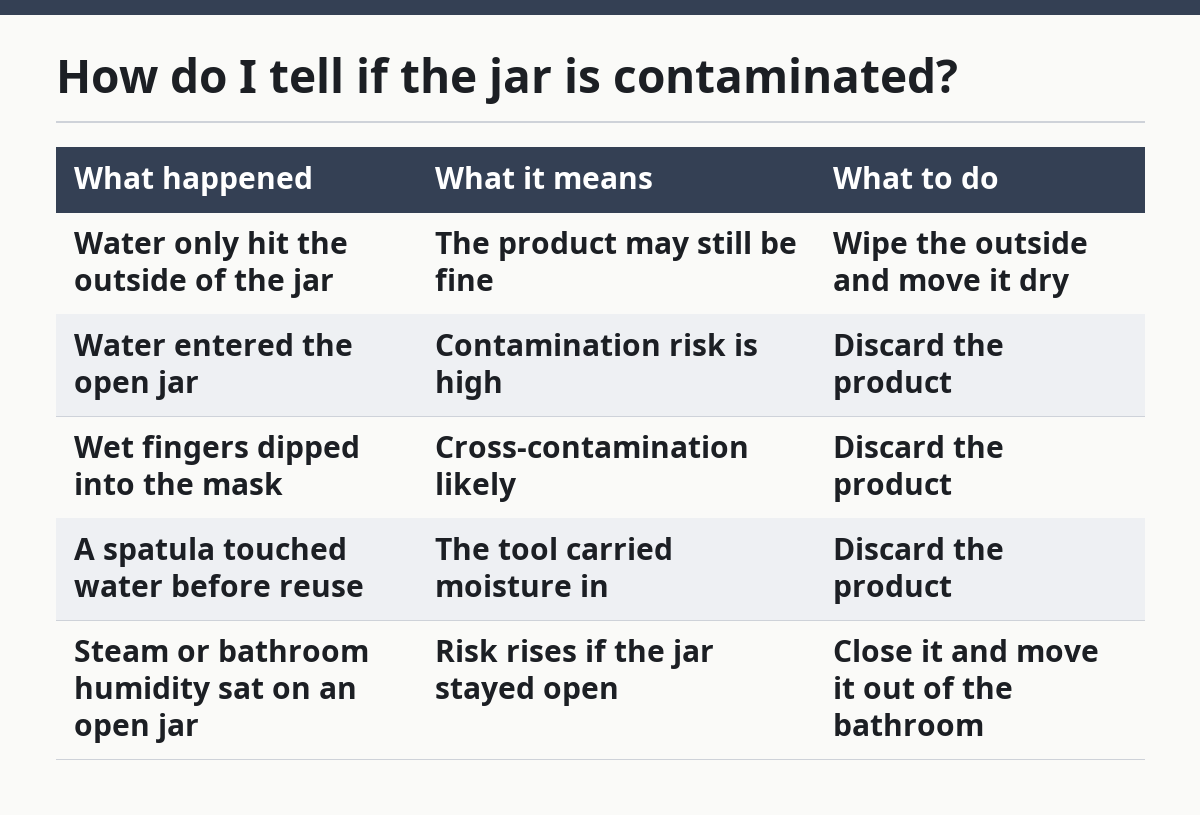
If you are unsure whether water reached the product, assume it did. That is the safer call with face mask jars because the damage is not always visible right away. A clean-looking surface can still hide diluted product near the top layer.
This is also why a generic “just stir it and keep going” answer is wrong for this topic. Stirring spreads the moisture through the whole jar instead of limiting it.
For cosmetic hygiene basics, the FDA cosmetics safety page and the CDC handwashing guidance are useful starting points.
What if only the outside got wet?
If only the outside got wet, you can usually save the jar by drying the container and protecting the product from more moisture. The key is that the water must not have entered the cream or clay inside.
Start with the lid closed. Wipe the outside of the jar, the base, and the rim with a dry cloth or paper towel. Then move it away from the sink, shower, or other wet area for at least the rest of the day. If the jar was open while the splash happened, do not guess; check the product carefully before using it again.
This is where face mask jars differ from pump bottles or tubes. A tube limits the path water can take. A jar leaves the full surface exposed, so bathroom humidity and wet hands have more ways to get in. That does not mean every open jar is doomed, but it does mean the margin for error is small.
A safe rule helps here: outside wet, inside dry is usually manageable; inside wet is not. If the rim is damp but the product never got touched, the jar may still be usable after a full dry-down of the outside. If the rim or product has visible moisture, do not try to rescue it by mixing.
People often try to “save” a jar by scraping away the top layer. That can leave contaminated product underneath and spread the problem deeper. It also misses the main issue: once water gets into a face mask container, the whole jar is compromised.
For related storage advice, see the skincare storage page and product contamination guide.
Should I keep using spatulas and wet fingers?
No, you should not keep using wet fingers or a damp spatula in a face mask jar. Those are common ways to move bathroom moisture and skin debris into the product.
A dry spatula is the better tool because it keeps your hands out of the jar and lowers cross-contamination. But a spatula only helps if it stays dry and clean. If it has touched the sink, counter splash, shower steam, or a rinse cup, it can carry water straight into the container. The same is true for fingers that were just washed and not fully dried.
Here is the practical comparison:
- Wet fingers: highest risk, because they drag water and skin bacteria into the jar.
- Dry fingers: less risk than wet fingers, but still not ideal for an open face mask jar.
- Clean, dry spatula: best of the three for jar products.
- Used spatula left in the bathroom: poor choice, because bathroom humidity and splash can still reach it.
If the tool itself got wet and then touched the mask, the jar should be treated as contaminated; if you are unsure how much water or residue transferred, consult a professional or follow the manufacturer’s guidance. This is especially important with face mask jars that sit near a sink, since the splash zone around a basin can catch more than people expect.
A small habit change does a lot here: open the jar only when your hands are dry, remove the amount you need, and close it right away. That reduces the time the product spends exposed to moisture in the air.
How do I handle the product after contamination?
Discard the product if water entered the jar, because trying to fix contaminated face masks usually leaves a hidden risk behind. A fresh jar is safer than a jar that has already had water, wet fingers, or a damp spatula inside it. For storage and replacement habits, see the face mask maintenance guide.
This is the part most people want to argue with, because tossing product feels wasteful. But face masks are not the place to gamble on a repair. Once moisture is inside, you cannot reliably separate the clean part from the dirty part. The contamination may sit near the top, spread through the surface, or cling to the sides of the jar.
Use a simple decision rule:
- Outside only, no product contact: keep the jar if you can dry it fully.
- Inside contact from water, fingers, or a tool: discard it.
- Any doubt about whether the water touched the product: discard it.
Do not transfer the remaining mask into another jar. That only moves the problem from one container to the next. Do not freeze it, stir it, or add more of the same product to “balance it out.” Those are the kinds of fixes that sound practical and fail in real life.
This is also where the honest limit of the advice matters. If the contamination was mild on the outside only, the jar may be fine. If the product was touched, there is no reliable home workaround that makes it trustworthy again.
The FDA notes that cosmetic products can become contaminated if they are handled improperly, which is why careful storage matters here.
What bathroom habits make this happen again?
Bathroom humidity, open lids, and wet hands are the three habits that keep face mask jars at risk. If any one of those stays in place, the same problem will come back.
The bathroom is a rough place for any open cosmetic jar. Steam from a shower raises the moisture in the air, wet counters leave invisible splash marks, and a sink puts hands and tools right next to the product. A jar left open for even a short time near that setup is exposed to more than most people think.
The habits that help are plain and specific:
- Keep the lid on except when you are actively scooping product.
- Dry your hands before you touch the jar.
- Use a clean, dry spatula instead of dipping fingers in.
- Wipe the rim before closing the lid if any product lands there.
- Move the jar away from the sink and shower splash zone.
If you store the jar in a bathroom, the room itself is part of the risk. That does not mean every bathroom shelf is bad in every case, but it does mean you need to be stricter about sealing the container and keeping tools dry. A cabinet outside the wettest part of the room is better than the edge of the sink.
The mistake to avoid is treating humidity like a small issue. For a sealed bottle, it may be minor. For an open face mask jar, it is one of the main ways water contamination starts.
What if I already used it after water got in?
Stop using it now and discard it if you already applied a face mask after water got into the container. Once the product has been touched after contamination, there is no reliable way to make it clean again at home.
That does not mean you need to panic. It means you should treat the container as done, clean the outside of any nearby surfaces, and replace the product rather than trying to salvage it. The risk comes from repeated exposure: every time the jar is opened, mixed, or touched, the contamination can spread.
If you used the mask and your skin feels irritated afterward, wash the area with cool water and a gentle cleanser. If irritation is strong or does not settle, ask a health professional for advice. That is especially true if the product went near the eyes or you notice swelling, burning, or a rash.
The hard truth is that a contaminated face mask jar is usually not worth saving. The cost of replacing one product is lower than the cost of keeping a jar that may have water, bacteria, or other debris inside it.
What if water got into my face mask?
If water got into the face mask jar itself, the safest move is usually to throw the product away. Water changes the condition of the whole container, not just the spot you can see, and bathroom humidity can make the problem worse.
Is a mask ruined if I dipped wet fingers in it?
Yes, you should treat it as ruined if wet fingers went into the jar. Wet fingers carry water and skin debris into the product, and that creates cross-contamination that is hard to fix at home.
Can I still use a mask after contamination?
No, not if the water, fingers, or a wet tool reached the product. A contaminated face mask container should be discarded, because there is no reliable home method that makes the whole jar safe again.
Drafted with AI; not yet reviewed by a person.


Leave a Reply