



Last updated: November 19, 2026
Quick Answer: a face mask has gone bad when the expiration date, smell, texture, color, or package changes no longer match what was normal when it was fresh.
Key Takeaways
- Texture, odor, color, or packaging changes can signal a face mask is no longer stable.
- The expiration date is the first clue, and package damage matters too.
- Sour, rancid, or sharply chemical odors are strong warning signs.
- Separation, grit, stringiness, or drying that won’t remix smoothly are bad signs.
If you are learning how to tell if a face mask has gone bad, stop using it if the mask smells odd, looks split or moldy, or came in a jar that’s been open for months. The steps below show you what to check and what each clue means.
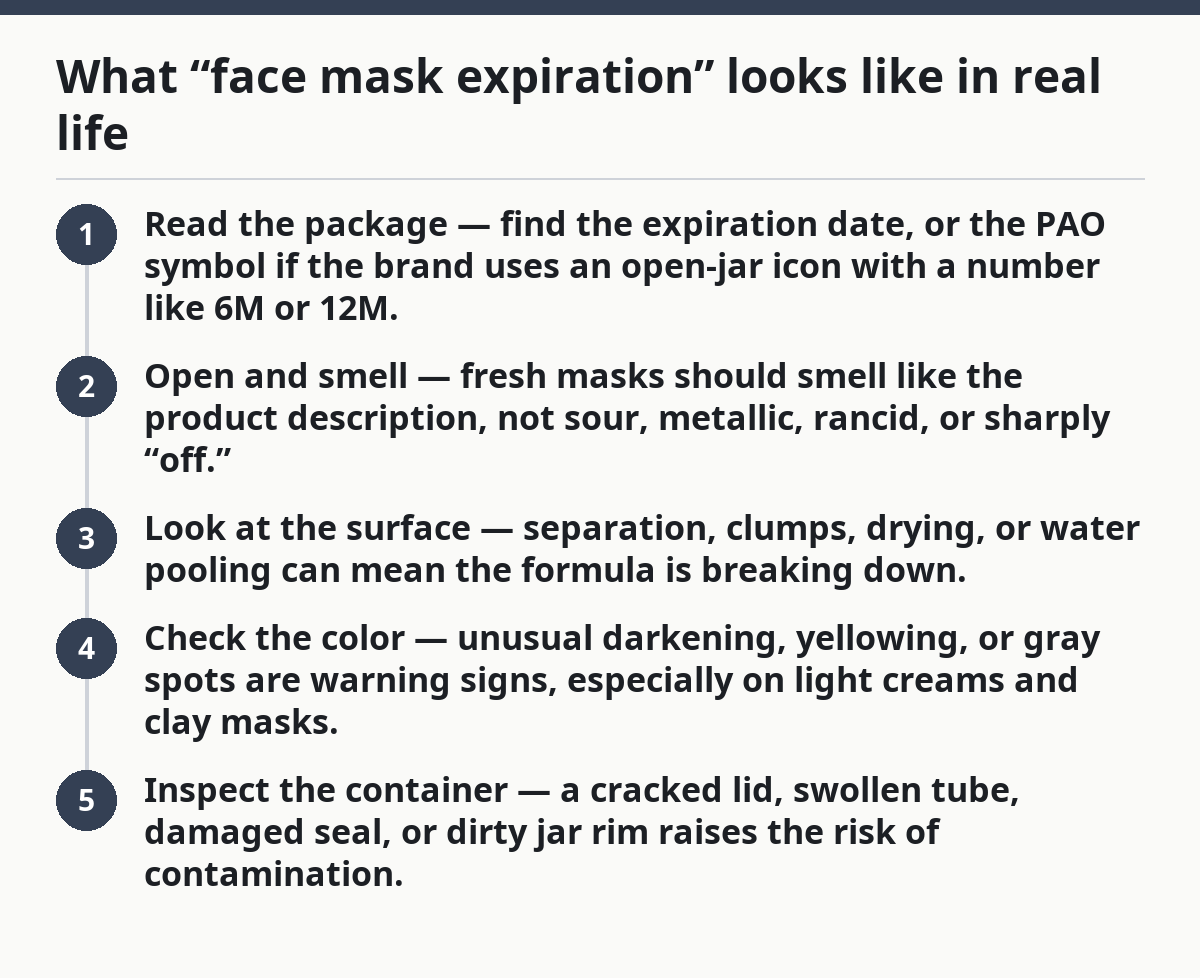
What “face mask expiration” looks like in real life
How to tell if a face mask has gone bad starts with the product’s texture, odor, color, or packaging changing in a way that suggests the formula is no longer stable. That can happen before the date on the box, especially with water-based formulas, fragrance-heavy masks, and products in jar packaging.
Picture this: you’re about to use a mask you opened months ago, and the surface looks thinner than before. The lid is still on, but the smell is sharper, the color has shifted, or the cream has separated. Those are the kinds of signs that matter most.
A change is the clue.
The quickest check is simple:
- Read the package — find the expiration date, or the PAO symbol if the brand uses an open-jar icon with a number like 6M or 12M.
- Open and smell — fresh masks should smell like the product description, not sour, metallic, rancid, or sharply “off.”
- Look at the surface — separation, clumps, drying, or water pooling can mean the formula is breaking down.
- Check the color — unusual darkening, yellowing, or gray spots are warning signs, especially on light creams and clay masks.
- Inspect the container — a cracked lid, swollen tube, damaged seal, or dirty jar rim raises the risk of contamination.
For a broader care routine, the at-home face mask safety and maintenance hub covers storage and handling, and the face mask ingredients guide explains what different formulas contain. This page stays focused on spotting spoilage before you put anything on your skin.
Check the date first, then the package
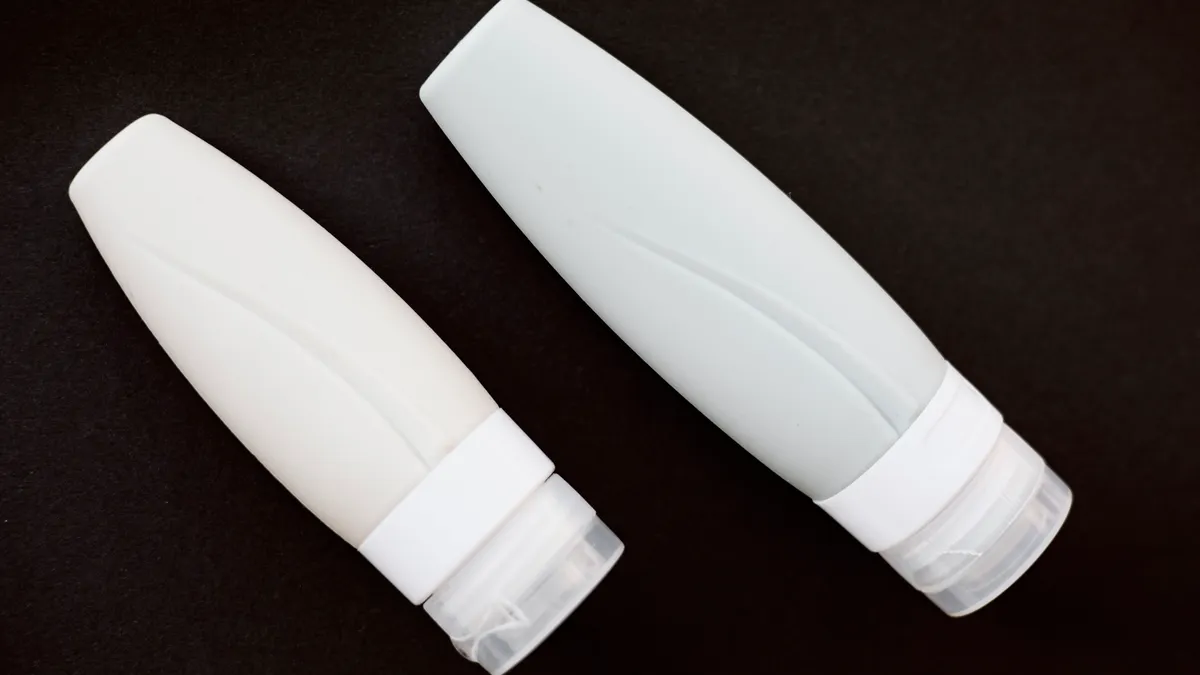
The expiration date is the first clue, and a damaged package can matter just as much. A sealed tube packaging usually protects a mask better than a wide-mouth jar, because fewer fingers and less air get in.
Picture this: the product says it expires in 2026, but the seal is split and the cap leaks when you turn it over. The date alone does not rescue a bad package. A compromised container can let in air, microbes, and moisture long before the printed date matters.
Packaging can override the date.
Use this order:
- Check the printed date — look for “EXP,” “best by,” or a batch code with an expiry lookup on the brand site.
- Inspect the seal — a broken inner seal, lifted foil, or missing safety band is a warning.
- Squeeze the tube — if product oozes around the cap or seam, air may have gotten inside.
- Look at the jar rim — dried product, crust, or residue around the edge can mean the formula has been exposed too often.
Jar packaging is the least forgiving format here. A product can stay stable in a sealed jar for a while, but every open-and-close cycle adds exposure. Tube packaging is usually better at keeping the formula cleaner for longer. That does not make a tube safe forever. It just gives you fewer failure points.
What smell changes mean
A face mask that smells sour, rancid, or chemically sharp is a strong sign it has gone bad. Fragrance can mask early spoilage, so a product with perfume may still turn even if it does not smell obviously rotten at first.
Picture this: you twist off the lid and the scent hits harder than usual, but not in a good way. It smells stale, sharp, or like old oil. That change is not cosmetic. It often means the oils, preservatives, or water phase in the formula are no longer holding together the way they should.
Smell changes matter.
Look for these odor clues:
- Sour or fermented smell — often points to contamination or breakdown in a water-based formula.
- Rancid oil smell — common in masks with plant oils or butters that have oxidized.
- Sharp chemical smell — can signal unstable fragrance or ingredient separation.
- No smell at all, but a new texture — fragrance may have faded while the formula still degraded.
Fragrance is a tricky clue. A scented mask can sometimes hide mild spoilage for a while, so do not use scent as the only test. Also, some masks naturally have a mild base smell from clay, sulfur, or botanical extracts. The question is not “Does it smell strong?” The question is “Does it smell different from when it was fresh?”
How to spot texture and separation problems
A face mask has likely gone bad if it looks separated, watery, gritty, stringy, or dried out in a way that won’t remix smoothly. Texture changes are one of the most useful signs because they are easier to see than chemical breakdown.
Picture this: you stir the jar and the top looks oily while the bottom is thick like paste. Or you squeeze a tube and thin liquid runs out before the cream. That split can happen when emulsions fail, water evaporates, or preservatives stop doing their job.
Separation is not normal.
Here’s how to check it:
- Stir gently — use a clean spatula or applicator, not your fingers.
- Watch for layers — oil on top, liquid at the bottom, or lumps that do not blend back together are bad signs.
- Check the spread — a fresh cream should spread evenly; a spoiled one may drag, pill, or clump.
- Press a little between fingers — if a gel mask turns slimy or a cream feels grainy, the formula may be failing.
Some separation is reversible in products that are meant to be mixed before use. Read the label first. If the mask says “shake well” or “mix before use,” a little settling may be normal. But if the texture stays broken after gentle mixing, or if the product has changed in smell or color too, skip it.
Water-based formulas are the most likely to show this kind of change because water supports microbial growth if preservation weakens. That’s why texture matters more than it seems. A mask can look “just a little off” and still be unsafe to apply.
Can mold show up on a face mask?
Yes, mold can show up on a face mask, and any visible fuzzy spot means the product should be discarded. Even a tiny patch is enough to make the whole container unsafe, because spores can spread beyond what you can see.
Picture this: you open a jar and notice a white speck, a green dot, or a fuzzy patch near the lid. Maybe it sits on the surface, maybe on the rim, maybe under the cap. That is not a cosmetic flaw. It means the mask has been exposed to contamination.
Discard it.
Mold signs can include:
- Fuzzy or dusty spots on the surface
- Green, black, white, or gray patches
- Spots near the lid or rim
- Musty smell that wasn’t there before
Do not scrape mold off and use the rest. Do not stir it in. Do not try to salvage the top layer. A moldy mask is past the point of safe use.
This is where jar packaging causes the biggest problems, because the opening is wide and the product is touched more often. Tube packaging lowers that risk, but it does not erase it. A tube with damaged seams, a bad cap, or old product inside can still go bad.
Which masks spoil faster?
Water-based masks spoil faster than drier formulas, and masks with fewer preservatives are usually less forgiving after opening. That matters most for masks with botanicals, fragrance, or active ingredients that do not like heat and air.
Picture this: you have two masks sitting in the same cabinet. One is a clay mask in a tube, the other is a creamy hydrating mask in a jar. The cream usually gives you more spoilage clues sooner, because water and richer ingredients give microbes and oxidation more chances to cause trouble.
Formula matters.
Here’s the rough order of risk:
- Water-based creams and gels — more likely to spoil after opening.
- Fragranced masks — scent can hide early changes.
- Jar-packed products — more air and finger contact.
- Dry clay masks — often more stable, but still not immune if moisture gets in.
Preservatives are there to slow spoilage, not stop time. A mask with preservatives can still go bad if it is old, contaminated, or stored badly. That is why the date on the box is only the starting point. The product itself gets the final vote.
A common mistake is assuming “natural” means safer or longer lasting. It often means the opposite. If a mask relies on fewer preservatives, it may be less protected once opened. The label can’t tell you everything, but it can tell you whether the product is built to handle water and air for long. For related guidance, see the face mask ingredients guide and the at-home face mask safety and maintenance hub.
When to stop using it, even if it looks almost fine
Stop using a face mask the moment it smells wrong, separates in a way that won’t blend, shows mold, or has a damaged seal that makes contamination likely. Those signs outweigh a printed date.
Picture this: the product is only a little past its period-after-opening mark, and you want to get one more use out of it. But the lid is cracked, the smell has changed, and the cream has gone lumpy. That is not a gray area. It is a clear stop sign.
Stop at the first clear warning.
The biggest mistake is trying to “save” a questionable mask because it cost money. The real cost is skin irritation, clogged pores, or a contaminated product touching your face. If the formula looks, smells, or feels wrong, the safe move is disposal.
A simple rule helps:
- One bad clue in a well-sealed product can still be enough to make you cautious.
- Two or more bad clues — such as smell plus separation, or mold plus packaging damage — mean it’s done.
- Any visible mold means discard it immediately.
If the package is intact, the smell is normal, and the texture still matches what you remember, the mask is probably fine. That is not a promise. It is a practical screen based on the clues you can see without special tools.
Questions people ask before they use an old mask
A face mask can raise the same few questions every time, and the answers are usually about what you can verify on the package and in the product itself. These quick checks help you decide fast.
Can you use a face mask after it expires?
You should not rely on a face mask after it expires. The date means the formula is no longer guaranteed to stay stable, and the smell, texture, or preservation system may have changed even if the product still looks normal.
What does a spoiled face mask look like?
A spoiled face mask may look separated, discolored, dried out, clumpy, or moldy. It may also smell sour, rancid, or unusually sharp, and the container may show leaks, cracks, or a broken seal.
Do unopened face masks expire?
Yes, unopened face masks still expire. An unopened seal slows damage, but it does not stop ingredient breakdown forever, especially with water-based formulas, fragrance, and products stored in heat or sunlight.
Can a face mask go bad before the date on the box?
Yes, a face mask can go bad before the printed date if the package is damaged, the product gets contaminated, or the formula was exposed to heat or moisture. The date helps, but it is not the only clue that matters.
FAQ
can you use a face mask after it expires?
A face mask after its expiration date is a bad bet. The formula may still look usable, but the preservative system and texture can drift out of spec, especially in jar packaging and water-based formulas. If anything smells, looks, or feels off, do not use it.
what does a spoiled face mask look like?
A spoiled face mask often shows separation, clumps, discoloration, or a fuzzy patch of mold. The smell may turn sour, rancid, or sharply chemical, and the container may have a broken seal or crust around the lid. One clue can be enough to stop.
do unopened face masks expire?
Yes, unopened face masks expire. A sealed package slows exposure to air and germs, but ingredients still age over time. The printed date and the condition of the seal both matter, especially for products with fragrance or a shorter shelf-life formula.
Drafted with AI; not yet reviewed by a person.
Leave a Reply