



Last updated: November 20, 2026
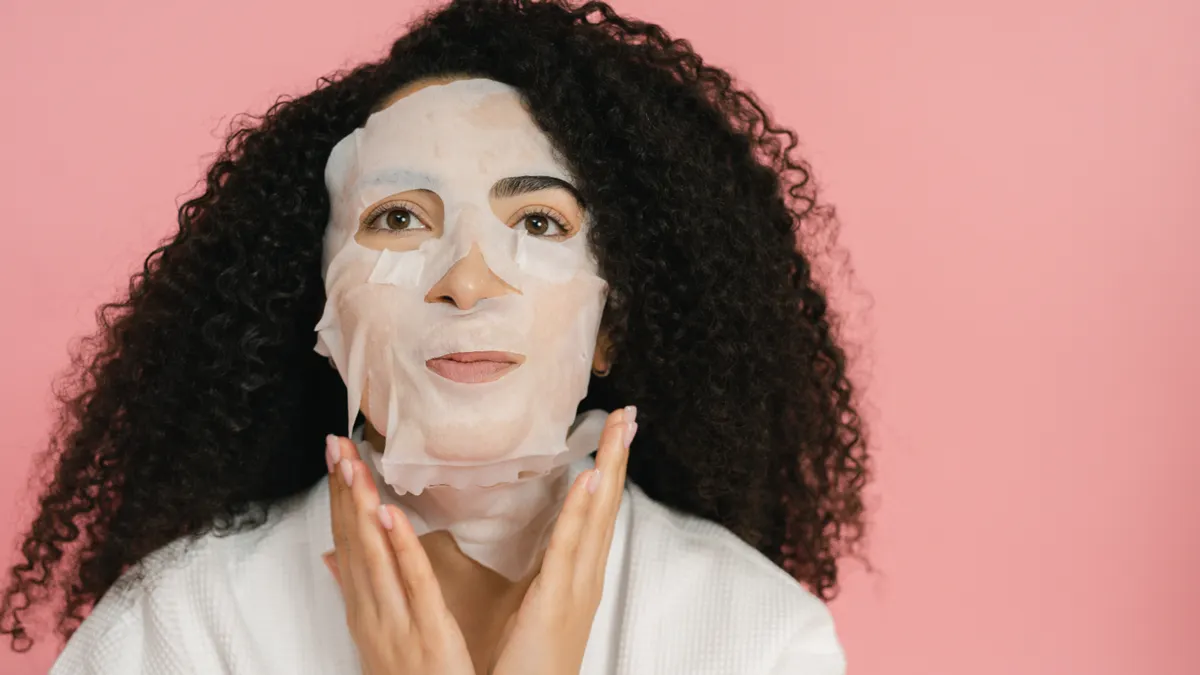
Quick answer: in sheet mask fabrics, fit, seal, and serum delivery usually matter more than the serum name, and most masks are designed for about 10 to 20 minutes of wear. Sheet mask fabrics change how tightly a mask hugs the face, how well it holds a seal around the edges, and how steadily serum reaches the skin. A thinner, more flexible fabric often clings better in small curves like the nose and jaw, while a stiffer fabric can leave gaps and let serum run where it should not.
Key takeaways
- The fabric, not just the serum, shapes how long a sheet mask stays in place on the face.
- Thin, flexible materials usually follow facial curves better than thicker, stiffer ones.
- A better seal means less slipping, less evaporation, and more even contact with skin.
- Fabric texture and density change how much serum stays on the sheet instead of moving to the face.
- The “best” fabric depends on the face shape and the finish you want, not on a single winner.
What does sheet mask fabric actually do?
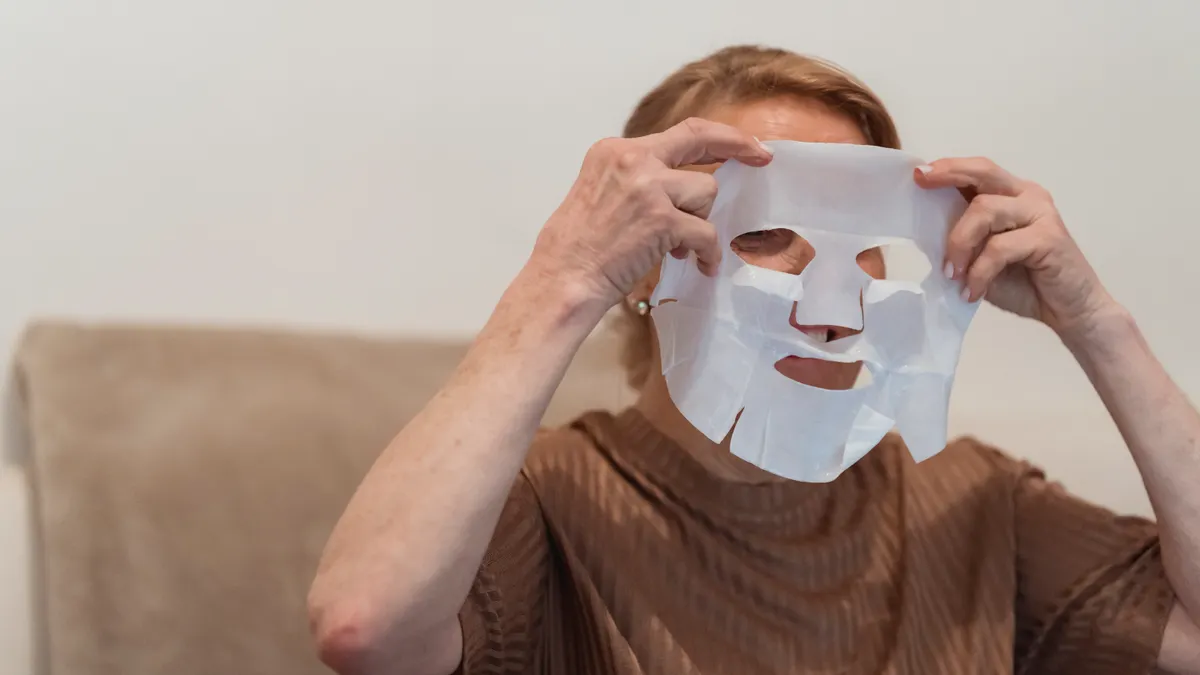
Sheet mask fabric acts as the carrier, the fit layer, and part of the serum delivery system. It holds the liquid, presses it against skin, and decides how much of the sheet stays in contact with the face for the full wear time, often about 10 to 20 minutes.
A generic article often stops at “cotton feels nice” or “hydrogel feels cooling.” That leaves out the real mechanism: fiber density, stretch, and surface grip. Those three traits decide whether a mask sits flat on the cheeks, bridges over the nose, or slides down before the serum has a chance to stay put.
Think of the fabric as the part that controls the shape of the treatment, but treat that as a guide rather than a rule; if you have sensitive, shaved, or reactive skin, a dermatologist or esthetician can help you choose a safer option. If the sheet has poor drape, even a good serum can pool at the chin or dry out near the edges. If the fabric clings well, the serum stays in contact with skin more evenly across the forehead, cheeks, and jaw.
The hub page on face mask materials explained sits above this guide for a broader comparison of sheet, cream, clay, gel, and overnight masks. This page stays focused on sheet mask fabric materials: the way they fit, seal, and move serum.
Which fabrics fit the face best?
The fabrics that often fit best are the ones with more flexibility and surface contact, especially bio-cellulose and many nonwoven fabric sheets. These tend to drape closely over the nose, mouth, and chin instead of standing off the skin like a dry paper layer.
Here is the basic comparison people usually need in one place:
| Fabric type | Fit on facial curves | Seal at edges | Serum hold | Comfort feel |
|---|---|---|---|---|
| Cotton | Moderate | Moderate | Moderate | Soft, familiar |
| Cellulose | Good | Good | Good | Light and flexible |
| Hydrogel | Very good | Very good | High | Cool and slick |
| Bio-cellulose | Very good | Very good | High | Thin, close-fitting |
| Nonwoven fabric | Variable | Variable | Variable | Depends on density |
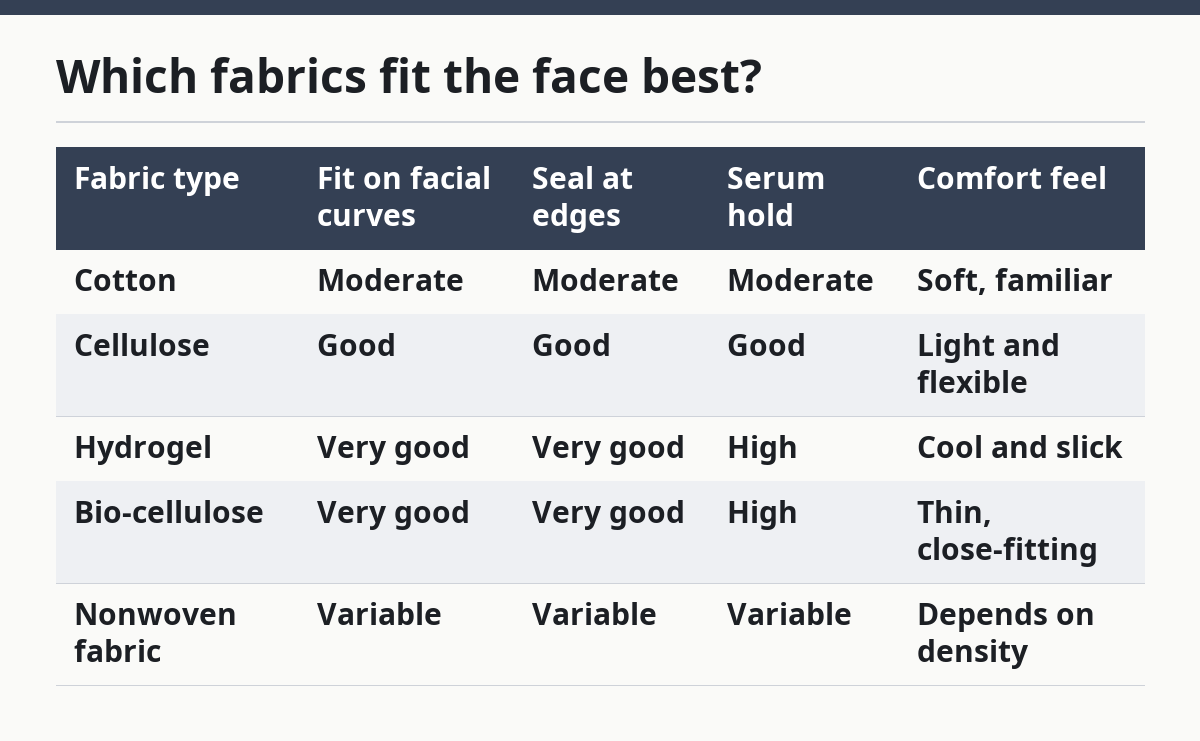
Cotton can feel comfortable, but it may not cling as tightly if the weave is loose or the sheet is thick. Cellulose usually bends more easily and can follow the face better. Hydrogel and bio-cellulose often sit close to the skin because they act like a second skin rather than a dry sheet.
Nonwoven fabric is a broad category, so results vary a lot. One nonwoven sheet may feel soft and cling well, while another may be thicker and less precise around the nose or jaw. That is why the label alone does not tell the full story; the structure of the sheet matters as much as the name.
A good fit matters most for readers with sharp cheekbones, a narrow chin, or a face shape that makes masks slip at the mouth. It matters less if the main goal is a relaxed, cooling feel and the mask will only stay on for a short session. If the fabric cannot follow the face, the serum has to work against air gaps.
Why does a seal matter for serum delivery?

A tight seal matters because serum only reaches the skin where the sheet stays in contact. When the edges lift, the liquid on those spots can evaporate, move, or collect in the wrong area instead of staying where the skin can use it.
Serum delivery is not only about how much liquid a mask starts with. It is also about how evenly the fabric spreads that liquid across the face during the wear time. A dense fabric can hold more serum in place, but if it feels too thick or stiff, it may lose contact in key zones and waste that advantage.
This is where fiber density becomes useful to think about. Denser fabrics often hold serum better, but they can also feel less breathable or less pliant. Looser fabrics may feel lighter, yet they can drip or dry faster if they do not grip the skin well enough.
For a reader looking for better contact after shaving, this matters because freshly shaved skin often feels more sensitive and uneven. A sheet that seals cleanly without tugging can spread serum more steadily across the cheeks and neck line. A poor seal can leave some areas drenched and others bare.
The trade-off is usually between cling and comfort: more cling often means more control, though not every face finds that more comfortable. A very sticky hydrogel sheet may stay put, yet it can feel heavy on some faces. A lighter cellulose sheet may feel easier to wear, but it may need better placement to avoid lift at the edges.
How do cotton, cellulose, hydrogel, bio-cellulose, and nonwoven fabric differ?
These fabrics differ most in structure, not just in feel. Cotton and many nonwoven fabric sheets rely on fiber arrangement, while hydrogel and bio-cellulose rely on a closer, more skin-hugging structure that changes both fit and serum hold.
Cotton is a familiar name, but it may not be the most precise fit. It tends to feel soft and breathable, which many people like, yet it may not press as tightly into the small folds beside the nose or under the mouth. Cellulose usually gives a cleaner drape, so it often sits flatter with less bunching.
Hydrogel stands out because it is thick enough to feel cushioned but flexible enough to cling. That combination often improves the seal around curved areas. Bio-cellulose goes even closer to skin texture, which is why it is often associated with a very close fit and strong contact.
Nonwoven fabric is the broadest label here, and it can be made to behave in very different ways. Some nonwoven sheets are built for better serum retention, while others are made to feel light and airy. A reader who only sees “nonwoven” on the package should expect variation, not a single result.
This is the mistake many summaries make: they treat all sheets as if they differ only by brand, so it helps to consult the ingredient list and the material description before choosing. In practice, a sheet mask fabric material can change the feel more than the serum name does. Two masks with similar ingredients can behave very differently if one has a thin bio-cellulose layer and the other has a heavier nonwoven base.
What makes a sheet mask cling better?
A sheet mask clings better when it has a thin, flexible structure, enough moisture to stay pliable, and a cut that matches the face. Material choice matters, but shape and saturation matter too.
The first factor is flex. Fabric that bends easily around the nose bridge, cheeks, and jaw line will hug the skin instead of arching away from it. That is one reason bio-cellulose and hydrogel often feel more secure than stiffer cotton-heavy sheets.
The second factor is surface grip. Some fabrics lightly stick to skin as the serum warms and settles, which helps the mask stay in place. That grip should feel secure, not tacky or rough. If the mask keeps sliding, the problem is often a mix of low cling and a bad facial cut.
The third factor is how evenly the fabric holds serum. A well-saturated sheet can mold more closely, but too much liquid can make it slip. Too little liquid can make the sheet dry on contact and lose its seal before the wear time is over.
How should you choose the right fabric for your face?
The right fabric depends on whether you care most about fit, comfort, or how evenly the serum stays on the skin. If fit is the priority, bio-cellulose and hydrogel are usually the strongest starting points. If comfort and a lighter feel matter more, cellulose or some nonwoven fabric sheets may suit you better.
A simple way to think about it is this:
- Look at the face shape first. If the nose bridge is narrow or the chin is sharp, choose a fabric that is thin and flexible.
- Check the material name, not just the picture. “Cotton” and “nonwoven” can cover very different sheet structures.
- Match the fabric to the goal. A closer seal supports more even serum contact; a softer sheet may feel better for short wear.
- Watch the edge behavior. If the corners lift in the first few minutes, the fabric may be too stiff for that face.
- Treat comfort as part of performance. A fabric that feels nice but slides around is not doing its job well.
This is also where a clear limitation belongs: no single fabric is best for every face. A close-fitting hydrogel may be wrong for someone who dislikes a heavy or cool feel. A soft cotton sheet may be wrong for someone who wants maximum edge contact and a tidy seal.
What are the common mistakes with sheet mask fabric?
The most common mistake is judging only by serum ingredients and ignoring the sheet itself. That costs you fit, because a strong formula still cannot move well through a fabric that lifts at the cheeks or chin.
Another mistake is assuming thicker fabric always means better performance. Thickness can help serum retention, but it can also reduce drape and make the mask feel less precise. A heavy sheet that does not contour well can waste the very serum it is supposed to deliver.
A third mistake is treating all nonwoven fabric the same. The label tells you the construction type, not the full behavior. Density, stretch, and surface finish can change how the mask seals, and that difference matters as much as the ingredient list.
A final mistake is choosing by softness alone. Softness helps comfort, but it does not guarantee a good seal. The best material for fit often feels slightly more structured than the one that feels loosest in the hand.
How do fabric choices change the result you feel on skin?
Fabric choices change the result by changing how long serum stays in contact with the face and where it sits. A fabric that hugs closely gives a more even finish, while a fabric that gaps or slides can leave the skin feeling patchy in some areas.
Hydrogel and bio-cellulose usually give the most even contact because they cling closely and resist lifting. That can make them feel more efficient when the goal is steady serum contact across the cheeks, forehead, and jaw. Cotton and many cellulose sheets sit in the middle: often comfortable, often useful, but not always the tightest fit.
Nonwoven fabric can go either way, which is why it deserves a careful read rather than a quick guess. If the sheet is dense and supple, it may deliver serum well. If it is too loose or too stiff, it can lose contact and reduce the benefit of the formula.
The main takeaway is simple: the fabric is part of the treatment, not packaging around the treatment. Once a reader sees fit, seal, and serum delivery as one system, the choice gets easier. The right material is the one that stays close enough to do its work without turning the wear into a tug-of-war.
FAQ
Which sheet mask material fits best?
Bio-cellulose and hydrogel usually fit best because they drape closely and hug facial curves well. Cellulose can also fit well, especially when the sheet is thin and flexible. Cotton and some nonwoven fabric masks may fit less precisely if the material is stiffer or the cut is less exact.
What makes a sheet mask cling better?
A sheet mask clings better when the fabric is thin, flexible, and able to follow the face without springing away. Surface grip and serum balance also matter, since a sheet that is too dry or too wet can lose its hold. The cut of the mask matters too, especially around the nose and chin.
Does mask fabric change serum absorption?
Yes, mask fabric changes how the serum reaches the skin because it affects contact time, seal, and how evenly the liquid stays in place. A fabric that hugs well can support more even delivery across the face. A fabric that lifts or slides can leave some areas with less contact than others.
Drafted with AI; not yet reviewed by a person.

Leave a Reply