


Last updated: November 19, 2026
Quick answer: choose the mask format by where you will use it—home, office, gym, or plane—so cleanup, time, and comfort match the setting.
For How to choose a face mask by where you will use it: home, office, gym, or plane, a sheet mask fits a quick home reset, a cream mask suits sinks and longer sit-time, a stick mask is the least messy for office touch-ups, a travel-size mask is easiest to carry, and an overnight mask works only when you can sleep with product on your face.
Key Takeaways
- The setting often matters more than the brand.
- At home, cream and overnight masks are the most comfortable for many people.
- The office usually favors a stick mask; a sheet mask can work if you have privacy and a bin.
- For the gym, compact packaging matters most, so a travel-size mask or small stick is practical.
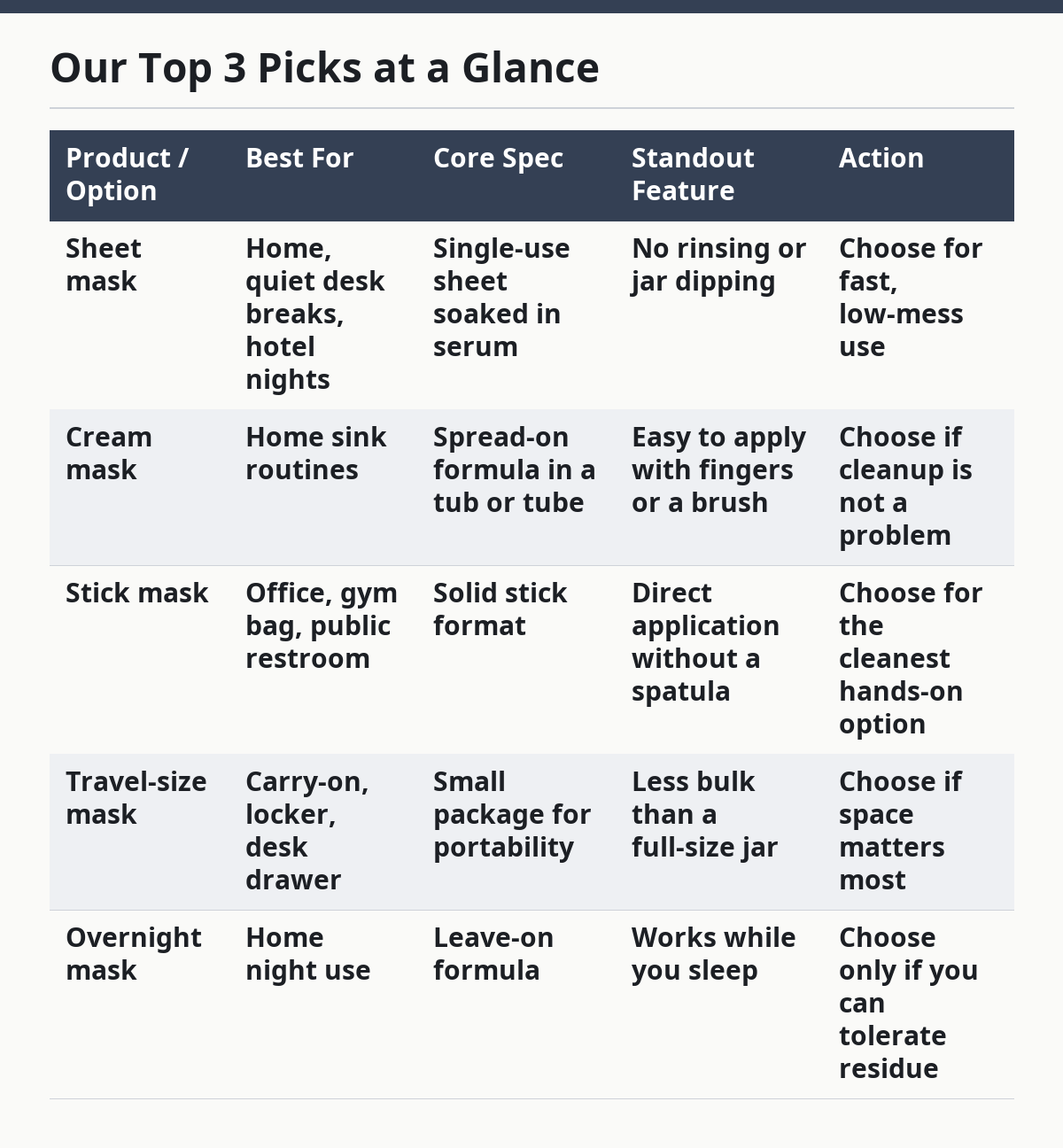
Our Top 3 Picks at a Glance
- #1 Best Overall: A sheet mask for home or hotel use, because it needs no jar, brush, or rinse bowl and usually comes in single-use packs.
- #2 Best Budget Pick: A travel-size cream mask, because you can carry a small tube or tub and use it only where cleanup is easy.
- #3 Best Heavy-Duty / Upgrade Pick: An overnight mask, because it stays on longer than a wash-off mask and makes sense when you want a leave-on step at home.
| Product / Option | Best For | Core Spec | Standout Feature | Action |
|---|---|---|---|---|
| Sheet mask | Home, quiet desk breaks, hotel nights | Single-use sheet soaked in serum | No rinsing or jar dipping | Choose for fast, low-mess use |
| Cream mask | Home sink routines | Spread-on formula in a tub or tube | Easy to apply with fingers or a brush | Choose if cleanup is not a problem |
| Stick mask | Office, gym bag, public restroom | Solid stick format | Direct application without a spatula | Choose for the cleanest hands-on option |
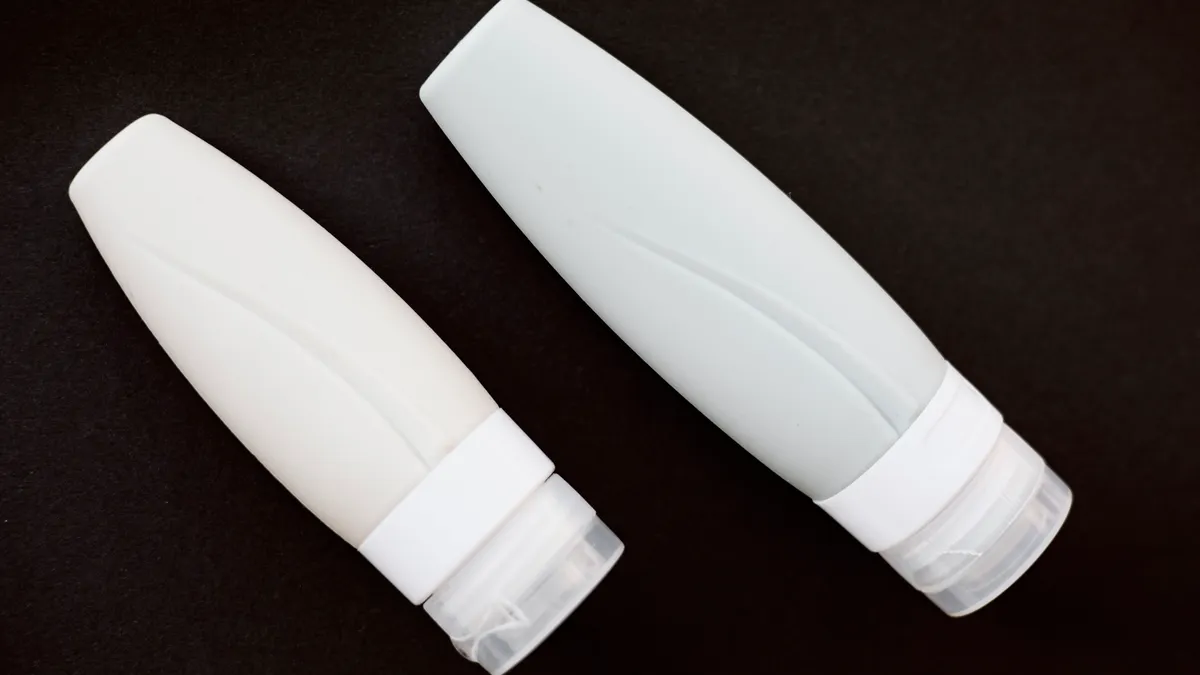
| Travel-size mask | Carry-on, locker, desk drawer | Small package for portability | Less bulk than a full-size jar | Choose if space matters most |
| Overnight mask | Home night use | Leave-on formula | Works while you sleep | Choose only if you can tolerate residue |
I write about skincare formats for a living, and the right choice here is usually about mess, time, and where you can clean up, not about chasing the fanciest label. If you want the broader map of formats, see the hub on face mask formats and use-cases beside this page.
What changes by place, not by brand?
The place changes the best mask more than the brand does.
Picture this: you have ten free minutes at home, then the same ten minutes in an office restroom, and then the same ten minutes on a plane. The product that feels simple in one setting can feel awkward in the other.
Here’s the catch: the setting decides what you can tolerate in your hands, on your clothes, and in the sink. A sheet mask leaves no bowl to wash. A cream mask asks for a rinse. A stick mask keeps fingers cleaner. A plane makes noise, spills, and tight space matter more than glow claims.
The practical split is simple:
- Home: the widest choice, because you can deal with a sink, towel, and longer wear time.
- Office: choose the cleanest format, because you may only have a bathroom stall or desk drawer.
- Gym: pick something that survives sweat, motion, and a fast shower.
- Plane: choose the least disruptive format, because seat space and dry cabin air change what feels comfortable.
The truth is, many “best face mask” lists ignore cleanup. That leaves readers with a jar they can’t use easily in a car, a locker room, or an aisle seat. The FDA also notes that cosmetic labeling can help you check ingredients before you buy.
Which mask works best at home?
At home, the widest range of formats works, but cream masks and overnight masks win for most people who want comfort and less rush.
Picture this: you’re on your couch with a towel nearby, the sink is two steps away, and nobody cares if you leave a little product on your cheeks for 15 minutes or longer. That’s the easiest setting for a cream mask or an overnight mask.
A cream mask suits home because it spreads well, feels familiar, and gives you control over where you apply it. You can use a brush or your fingers, then rinse in the same bathroom. The downside is obvious: jars can get messy, and a thick formula can drip if you move around. If your routine already includes a cleanser and a rinse step, that trade-off is fine.
An overnight mask is the home-only format most people misuse. It makes sense when you want a leave-on step and can sleep without rubbing product into a pillowcase. It is not the right pick if you hate residue, have a very oily feel on skin, or need a clean bed setup. The American Academy of Dermatology recommends choosing gentle products and avoiding ingredients that irritate your skin.
- Best home pick: Cream mask if you want control and can rinse.
- Best home pick for low effort: Overnight mask if you want to apply once and leave it.
- Skip both: if you need something that stays portable and tidy.
Two reliable source types support that logic: the American Academy of Dermatology’s guidance on choosing gentle skin-care products, and the U.S. Food and Drug Administration’s pages on cosmetic labeling and ingredients. Those do not pick a “winner” for you, but they do reinforce the idea that formula type and ingredient tolerance matter more than hype.
Which mask is best for the office?
The office winner is the stick mask, with a sheet mask as second place if you have privacy and a waste bin.
Picture this: you have a lunch break, a meeting later, and only a sink with paper towels. A stick mask is built for that kind of awkward gap because it goes on directly and keeps your hands cleaner than a jar.
A stick format wins in the office because it reduces contact, drips less, and fits in a desk drawer or tote. It is a plain answer to a plain problem. You do not want a clay smear under your nails before a presentation.
The weakness is also plain. Stick masks can be less even than a cream applied with a brush, especially along the edges of the face. They can also tug if the product is firm or if your skin is dry. If you need a fuller, more even layer and have time to rinse, a sheet mask or cream mask may feel better.
Use this quick rule:
- Choose stick if you need the cleanest hands-on option.
- Choose sheet if you can sit quietly, keep still, and throw away packaging discreetly.
- Choose cream only if you have a real wash-up plan.
The office is not the place for a large jar or anything that demands careful spreading in front of a mirror. That is why this section leans hard toward stick format. It is not glamorous. It is just less embarrassing.
What should you bring to the gym?
For the gym, a travel-size mask or a small stick format makes the most sense, because the locker room rewards compact packaging and fast cleanup.
Picture this: you have a post-workout window, damp hair, a shared sink, and a bag that already holds shoes and a water bottle. In that setting, a travel-size mask is the easiest thing to carry, and a stick mask is the easiest thing to use without turning your hands into a mess.
The gym changes the rules in two ways. First, you are often rushed. Second, you may be dealing with sweat and a higher chance of touching your face often. A small tube or compact stick fits that reality better than a wide tub or a full-size sheet mask package.
Here’s the catch: “travel-size” solves carrying, not performance. A small package can still be a cream, gel, or overnight format, so the label alone does not tell you if it will rinse easily or feel sticky after application. Check the format first, then the size.
A gym-safe choice should be:
- Small enough for a bag or locker.
- Simple enough to apply fast.
- Easy to wipe off if you need to leave in a hurry.
A sheet mask can work after a shower if you have time and privacy. But if your schedule is tight, the paper waste and awkward fit make it less practical than a stick or travel-size tube. The general rule is boring because it works: the gym favors compact, low-fuss formats.
What is a good mask for a plane?
For a plane, a sheet mask or a leave-on travel-size mask is usually the most practical choice, as long as it stays neat and does not bother the person next to you.
Picture this: you’re in a narrow seat, the tray table barely fits a laptop, and the cabin air feels dry. A plane punishes bulky jars, wet hands, and anything that needs a sink. That is why travel-size and sheet formats work best most often.
A sheet mask can work because it arrives as a single sealed packet and does not require a brush or a bowl. It is still not perfect on a plane. The mask can slip, the packaging makes some noise, and you may not want to lean into a long application while squeezed next to a stranger. If you choose this route, a quiet, low-profile version is the better fit.
A leave-on travel-size mask is often the cleaner answer because you can apply a thin layer and stop. That cuts down on handling. But if it feels greasy or transfers onto a mask, scarf, or seat belt, it becomes a bad choice fast.
The plane rule is this:
- Pick sheet if you want a single-use packet and can stay still.
- Pick travel-size leave-on if you want minimal handling.
- Skip cream jars and anything that needs a full wash.
The plane is where comfort beats ambition. If a product needs a sink, a mirror, or a calm row of seats, it does not belong in your carry-on routine.
The honest side-by-side: which format wins where?
Sheet masks win for low-mess use, cream masks win for control at home, stick masks win for clean hands, travel-size masks win for portability, and overnight masks win only when you can sleep with them on.
Picture this: you are choosing between five formats, not five brands. That is the useful comparison. The place tells you what matters most: cleanup, speed, comfort, or portability.
| Criteria | Sheet mask | Cream mask | Stick mask | Winner for this condition |
|---|---|---|---|---|
| Cleanup | Low after use, but packaging adds waste | Needs rinse or wipe-down | Lowest contact with hands | Stick mask |
| Best at home | Good for quiet sit-down use | Best for sink routines | Okay, but less even | Cream mask |
| Best in office | Possible, but awkward in shared space | Messy without a real wash-up plan | Fast and discreet | Stick mask |
| Best in gym bag | Bulky and easy to crumple | Can leak if the lid is loose | Compact and tidy | Stick mask |
| Best on a plane | Single-use and compact | Hard to use without a sink | Could work, but less common | Sheet mask |
| Hands-free feel | Yes, once applied | No, you may need fingers or a brush | Yes, direct application | Sheet mask |
| Time pressure | Moderate | Moderate to slower | Fastest | Stick mask |
| Leave-on use | No | Usually no | No | Overnight mask for leave-on needs |
| Portability | Good in single packets | Depends on container size | Very good | Travel-size mask |
The table shows the pattern clearly. Stick is the safest all-around answer for public places. Cream is the at-home control choice. Sheet is the easiest one-step option when you can sit still. Travel-size is a packaging answer, not a format by itself, so it only wins when the bag or drawer matters most.
When should you choose a different format entirely?
Choose a different format when your setting makes cleanup harder than the mask itself.
Picture this: you like a clay mask, but you are in a shared bathroom with no good sink, or you want something before a flight when your bag is already full. That is the moment to switch formats instead of forcing a favorite product into the wrong place.
These are the exception scenarios where the usual pick flips:
- You have a private bathroom at work. A cream mask can make sense if you truly have time to rinse.
- You are at home but short on time. A sheet mask or travel-size leave-on step is easier than a jar.
- You are packing light. A stick or single-use packet usually beats a full container.
- You need the cleanest hands possible. A stick format is the simplest public-space option.
If you want the shortest rule I can give, it is this: match the mask to the place first, then to the formula. That order prevents most bad buys.
Drafted with AI; not yet reviewed by a person.

Leave a Reply