




Last updated: November 19, 2026
Quick Answer: in face mask texture ingredients, 1 formula can feel silky, sticky, or tight depending on its slip agents, thickeners, clays, and film formers. This page explains Face mask texture and slip ingredients: what makes a formula spread well, so you can read a formula like a label instead of a mystery.
What “texture ingredients” do in a face mask
Texture ingredients are the parts of a face mask that control how it moves under your fingers. They change thickness, drag, cushion, shine, and how fast the product starts to set. In a formula, that can come from a silicone, a polymer thickener, a clay mineral, an emulsion, or a film former.
Picture this: you squeeze a mask onto the back of your hand and it either smears in one smooth pass or grabs the skin and piles up in ridges. That difference is not random. It usually comes from a mix of viscosity, slip, and film build.
- Viscosity = how thick or loose the formula feels
- Slip = how easily it moves across skin
- Drag = how much resistance you feel while spreading
- Set = how fast it stops moving and starts to dry or cling
The truth is, a mask that spreads well is usually built in layers. One ingredient gives body, another gives glide, and another keeps the formula from separating in the jar. A single ingredient rarely does all three jobs.
For the bigger ingredient map, the hub on [face mask ingredients and formulation science] can sit beside this page, and [silicone ingredients in skin care] is a useful companion page for slip. This article stays on texture and application only.
Key Takeaways
- A good-spreading mask needs balance, not just thickness.
- Silicones and some oils improve glide; clays and powders often increase drag.
- Polymer thickeners help the formula stay in place without turning chalky.
- Film formers can make a mask feel tight or rubbery as it dries.
- Emulsions often spread better than dry, paste-heavy formulas because the water and oil phases are already blended.
Why some masks feel silky and others feel sticky
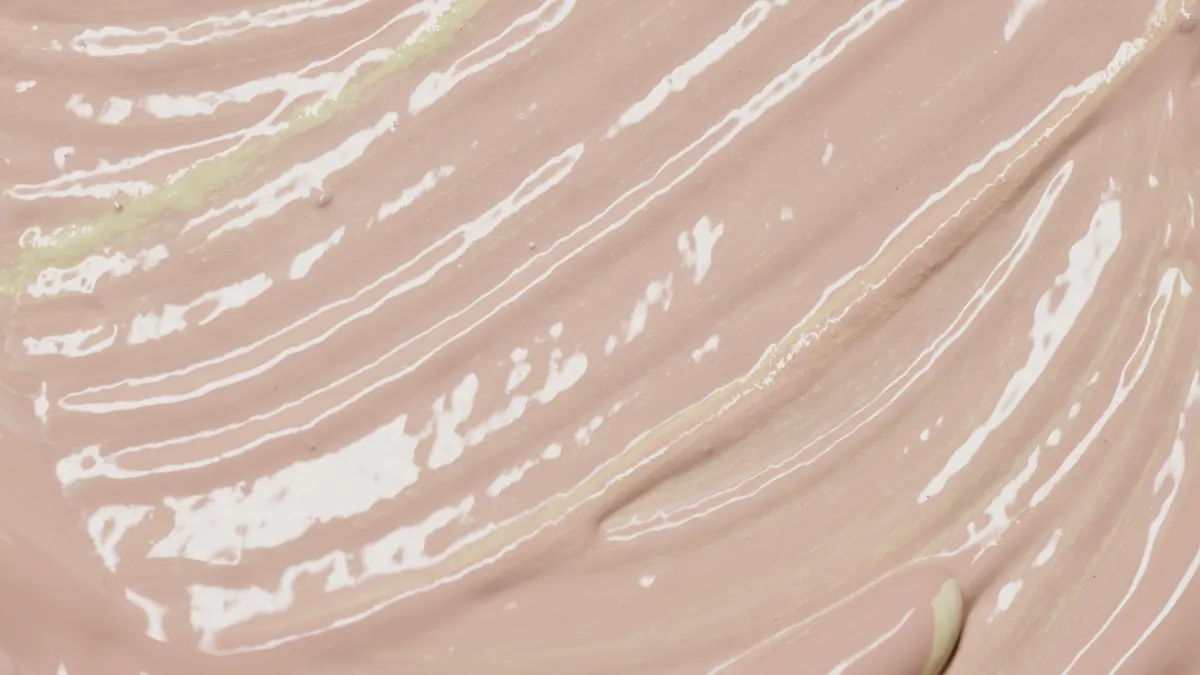
A mask feels silky when its slip ingredients reduce friction before the formula starts to set. A mask feels sticky when water, gums, or tacky binders dominate the formula and the surface grabs skin instead of sliding.
Picture this: you apply a cream mask in a thin layer, and it disappears under your fingers in a soft, cushioned way. Then you try another one and it catches at the cheekbone, leaving streaks and a waxy trail. That’s usually a texture balance issue, not a skin issue.
Silky formulas often use ingredients that lower surface friction:
- Silicones such as dimethicone or cyclopentasiloxane
- Lightweight emollients
- Fine emulsions with a smooth internal phase
- Small amounts of film formers that do not tighten too early
Sticky or grabby formulas often lean on:
- High levels of certain gums
- Too much humectant without enough slip
- Dense clay loads
- Dry powders that do not suspend well
A common mistake is to think “more thickener” means better texture. It doesn’t. A mask can become thicker and still spread worse, because the extra structure creates drag instead of cushion. That means thicker is not automatically smoother.
If a formula feels tacky on application but dries evenly later, the issue may be the ratio of water to solids. A well-made emulsion can start fluid, then hold its shape in a 1–2 mm layer without tearing or balling up. That’s the sweet spot many beauty formulators chase.
Which ingredients give slip, and which ones steal it?
Silicones, light esters, and some emollients usually give the most slip, while clay minerals and heavy powders usually steal it. The spreadability difference is easy to feel in a thin layer, especially across the jaw, nose, and upper lip.
Picture this: you spread a mask over damp skin and the finger path looks clean, even, and glossy for a few seconds. That glide usually comes from ingredients that reduce friction at the skin surface. On the flip side, a dry, matte paste tends to snag and leave uneven edges.
Here are the main players:
- Silicones: often the clearest source of slip. They create a slick, low-friction feel and help the mask move without scratching or pulling.
- Emollients and esters: these can give a softer, more cushion-like glide. They are often less slick than silicones but can still improve spread.
- Clay minerals: kaolin, bentonite, and related clays absorb oil and increase structure, but they also raise drag.
- Polymer thickeners: carbomer, acrylates crosspolymers, cellulose gums, and similar materials can add body. Used well, they keep a mask even; used poorly, they make it gummy or stringy.
- Film formers: ingredients that dry into a continuous layer. They can make the formula feel smoother at first, then tighter and less movable.
A formula with good slip often needs only a modest amount of a glide ingredient. Too much silicone can make the mask feel greasy or too mobile, so it slides around instead of staying where you place it. Too much clay does the opposite: the formula stays put, but it can feel like pushing paste across cardboard.
That trade-off matters on the face. A mask that spreads well should move in a thin film, not in clumps. If it smears in broken ribbons, the base is usually too dry, too packed with solids, or not emulsified well enough.
How do polymer thickeners and emulsions change spreadability?
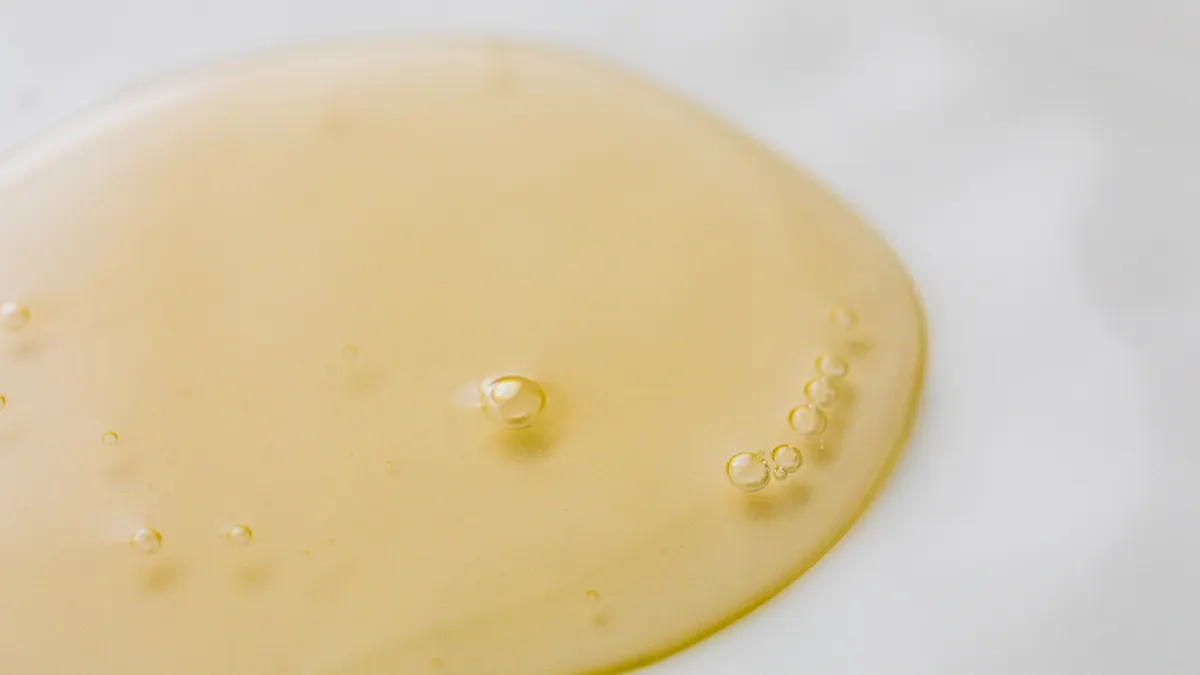
Polymer thickeners and emulsions control spreadability by deciding how much structure the formula has before and after it lands on skin. A stable emulsion often spreads more evenly than a dry paste because the droplets and water phase keep the product mobile for longer.
Picture this: you scoop a mask from the jar and it holds its shape on the spatula, but once it touches skin it fans out without tearing. That behavior usually comes from a balanced network of thickener and emulsion structure. The product is firm in the container and mobile on the face.
An emulsion is a blend of oil and water held together by emulsifiers. In face masks, that base can carry pigments, humectants, slip agents, and actives in a way that feels more uniform than a clay-heavy formula. The result is often better spreading and less grainy drag.
Polymer thickeners matter in three ways:
- They keep solid particles suspended.
- They stop the formula from separating in the jar.
- They create a consistent film so the mask does not puddle in one spot.
The catch is that too much thickener can create a “gel rope” effect. The product stretches instead of gliding, which feels sticky and uneven. That happens with some high-gum formulas, especially when the water phase is overloaded and the oil phase is too light to balance it.
A good spreadable emulsion usually has:
- enough water to keep it movable
- enough structure to stop running
- enough slip to reduce drag
- enough solids to hold the mask on the face for the intended wear time
If a mask spreads well in a thin 1 mm layer but turns streaky when applied thicker, that is a sign the structure is tuned for a film, not a heavy coat. That is not a defect by itself. It just means the formula wants a light hand.
What makes a mask turn rubbery or tight on the skin?
A mask turns rubbery when film formers, setting polymers, or drying agents build a continuous skin faster than the formula can stay mobile. That effect can be useful, but it also changes the feel from creamy to taut within minutes.
Picture this: you apply a mask and it feels smooth for a moment, then your cheeks start to feel like they are being wrapped in a thin elastic layer. That’s the rubberizing effect in action. It comes from ingredients that form a flexible film as water evaporates or the formula cures, and for some skin types a professional should be consulted if that feel is uncomfortable.
Common contributors include:
- Film formers that dry into a coherent layer
- Some acrylate polymers
- Certain starches or polysaccharides
- Drying clays that pull water from the formula and skin surface
This effect can help a mask stay in place, reduce transfer, and create that satisfying “set” feeling. But it also means spreadability can drop fast. If the product starts setting in under a minute, you may feel resistance before you finish applying it.
That is why timing matters. A fast-setting formula can be fine for a peel-off style or a short-wear treatment, but for a slower application a professional should be consulted and the product directions should be followed. The first section of the face may already be tightening before the last section is covered.
There’s another trade-off. A stronger film can feel elegant to one user and claustrophobic to another. If the goal is a creamy, massagable mask, a heavy film former load is the wrong direction. If the goal is a precise, no-slip layer that stays where it’s placed, film formers are part of the answer.
A simple way to read a face mask label for texture clues
You can spot most spreadability clues by reading the order and type of ingredients, not by chasing the front label. The ingredient list usually tells you whether the formula leans slick, thick, clay-heavy, or film-forming.
Picture this: you are standing in front of a shelf and two masks both promise “smooth application.” One contains dimethicone, an emulsion base, and a small amount of polymer thickener. The other starts with kaolin, bentonite, and several drying powders. Those two formulas will not feel the same on skin, even if the claims sound similar.
Use this quick checklist:
-
Look for silicones
Dimethicone and related silicones usually point to better slip and less drag. -
Check for clays
Kaolin and bentonite usually mean more structure, more oil uptake, and less glide. -
Find the thickener system
Carbomer, cellulose gums, and acrylates tell you the formula is being shaped for body and suspension. -
Look for emulsions
A cream or lotion-style base often spreads more easily than a dry paste base. -
Watch for film formers
If the formula lists several setting polymers, expect a firmer set and less open time. -
Read the position of the texture ingredients
Ingredients near the top usually matter more to feel than ingredients at the end of the list.
A useful rule: if the formula is packed with absorbent powders and has no obvious slip agent, expect more drag. If it uses silicones or a smooth emulsion base, expect easier spreading. If it has a strong film former system, expect a firmer set and less open time.
For a deeper ingredient read, the [face mask ingredients and formulation science] hub can help, and the [cosmetic emulsions guide] page is useful for comparing cream and paste bases. A formula that spreads well is usually one that lets the hand move without fight, stays even on the skin, and does not set before the application is finished. That is the standard.
Which formulas spread best for which job?
The best-spreading formula depends on the job: silky creams spread easiest, clay masks hold best, and film-forming masks set fastest. A single texture profile does not win every category.
Picture this: you want a mask you can paint on in a thin, even coat before dinner. You do not want one that cracks on contact or one that races down the sides of the jar. The right formula is the one whose texture matches the way you apply it.
Here is the practical split:
- Silky cream masks: best for easy spread, low drag, and a soft finish. These often use emollients, silicones, and emulsion bases.
- Clay masks: best for structure and staying power, but they usually need more force to spread. Kaolin and bentonite are the usual texture drivers.
- Gel masks: often have nice slip at first, but the feel depends heavily on the polymer system. Some are slick; some are gummy.
- Peel-off or rubberizing masks: designed to set. They may spread well at first, then tighten fast because of film formers and drying polymers.
The trade-off is simple. Better spreadability often means less hold. More hold often means more drag. Formulators balance those against the intended wear time and finish.
For a reader choosing by texture alone, the question is not “Which ingredient is best?” It is “Which ingredient mix matches the feeling I want?” If you want a mask that moves like lotion, look for emulsions and slip agents. If you want a mask that grips and stays put, clays and film formers will do more of the work.
A formula that spreads well is usually one that lets the hand move without fight, stays even on the skin, and does not set before the application is finished. That is the standard.
FAQ
What ingredients make a mask feel silky?
Silicones are the most common silky-feel ingredients in a face mask, especially dimethicone and related slip agents. Light emollients and well-built emulsions can also soften the drag. If the formula also includes a fine polymer thickener system, the result is often cushioned rather than greasy.
Why are some masks hard to spread?
Masks are hard to spread when the formula is too dry, too clay-heavy, or too high in draggy powders and gums. Bentonite, kaolin, and overbuilt thickener systems can all make the product grab skin instead of sliding. Poor emulsification can do the same thing by leaving the formula uneven.
What makes a mask set on the skin?
Film formers and drying polymers make a mask set on the skin. As water leaves the formula, these ingredients form a connected layer that feels tighter and less movable. Some clay systems also contribute by pulling moisture out of the film and raising the sense of set.
Drafted with AI; not yet reviewed by a person.



Leave a Reply