


Last updated: November 20, 2026
Quick answer: a gel face mask is different because it uses a water-based gel matrix instead of a cream, clay, or sheet substrate. In practice, that means a cooler touch, a lighter finish, and a thinner film on skin, often over 10 to 20 minutes.
What makes a gel face mask a different material format is the base itself: a gel structure built on water and polymer gels rather than a cream emulsion, clay paste, or fabric sheet. That material change is why the feel is cool, the slip is lighter, and the residue is usually thinner than in other mask formats.
Key takeaways
- Gel masks are built around water and polymer gel, so the texture feels slippery and light rather than heavy or pasty.
- The cooling effect comes from the formula’s water content, evaporation, and any added cooling agents, not from a thick cream base.
- A gel mask often leaves a thinner film on skin, which is why it can feel less occlusive than cream masks.
- This format can suit people who want a lighter finish and a cooler feel, but it may not be the best pick for anyone who wants a rich, cushy layer.
- The material format matters because it changes how the mask spreads, how long it feels wet, and what kind of finish is left behind.
What is a gel face mask?
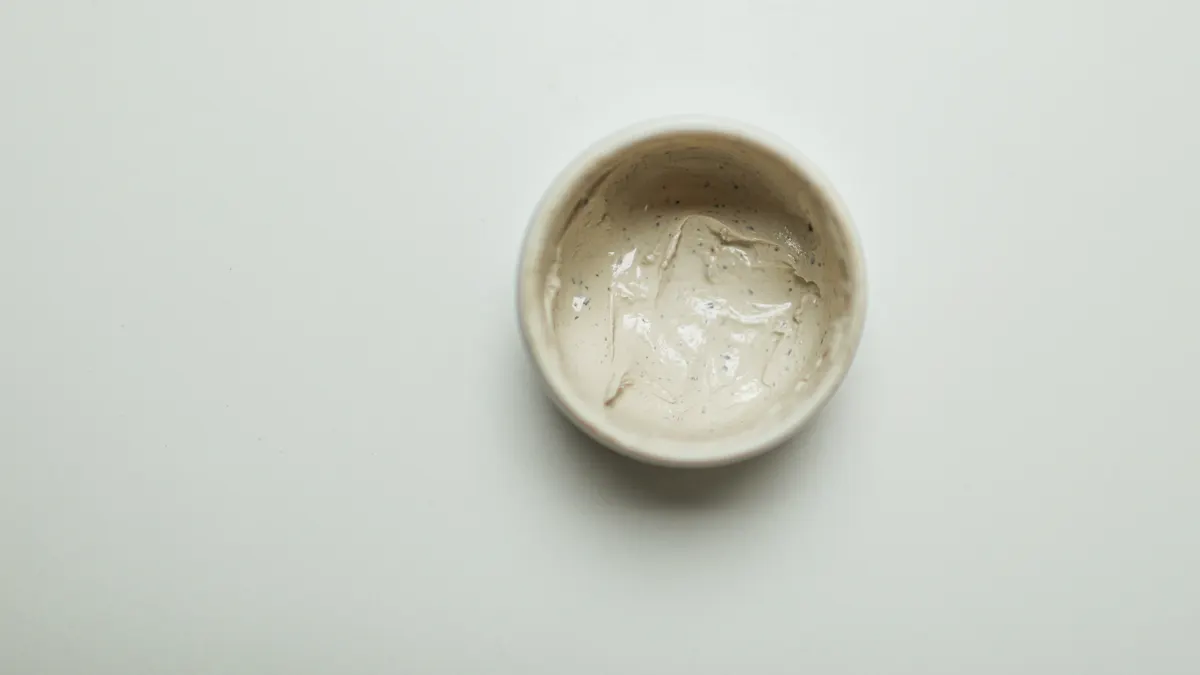
A gel face mask is a mask formula built on a gel texture, usually from water-based formulas and polymer gels. That structure gives it its clear, jelly-like body and its familiar slip. It is not the same kind of material as a cream mask, which relies on a richer oil-and-water emulsion, or a sheet mask, which depends on fabric or fiber.
That difference is not cosmetic jargon. It changes how the product behaves the moment it leaves the jar or tube. A gel mask tends to hold its shape, spread in a thin layer, and feel cooler on contact because the water phase is doing most of the work.
The term can cover a few product styles, but the material idea stays the same: a water-heavy, gelled base that feels light on skin. That is why the format is often linked with a fresh, chilled, or lightweight finish. It also helps explain why a gel mask can feel less greasy than a cream mask even when both are meant to sit on the face for 10 minutes or longer.
For a broader view of how this format fits beside sheet, cream, clay, and overnight masks, the hub page on face mask materials explained is the right companion. For ingredient context, the cosmetic ingredients overview page helps frame what a formula is built from, while how to choose a face mask explains how format affects feel.
Why does a gel mask feel cool?
A gel mask feels cool because water-based formulas pull heat away from the skin as they spread and sit there. Gel masks also often contain cooling agents, which can make that first touch feel even colder without needing a thick, oily layer. The feel is material-led, not just fragrance-led.
This is where gel masks separate from cream masks most clearly. A cream mask usually feels cushioned and warm, especially if it has a richer emollient base. A gel mask feels more like a thin, wet film. That thinner film lets heat move differently across the skin, so the sensation is usually sharper and cleaner.
The cooling effect matters most to readers who want a lighter sensory feel after cleansing, shaving, or a warm rinse. It can be pleasant, but it is not proof that the mask is doing more work. Cool does not automatically mean stronger, and it does not tell you how moisturizing or gentle the formula will be.
The same cooling property can also be less appealing if a person wants a mask that feels dense, plush, or deeply occlusive. In that case, the material format works against the goal rather than for it. The face mask materials explained guide has a side-by-side breakdown of those texture differences.
How is the gel structure made?
The gel structure is made by turning a water-based formula into a semi-solid using polymer gels. Those polymers trap water in a network, so the product holds together without turning into a cream or a liquid. That is why the texture can wobble in the jar but still stay on the face.
A simple way to picture it is this: water gives the mask its fresh feel, while the polymer network gives it body. That combination is what lets a gel mask glide on in a thin layer instead of sitting in a thick coat. It is also why many gel masks leave a more lightweight finish after rinsing or wiping.
The structure can also change how the mask behaves during wear. A gel mask often dries differently from a clay mask and feels less chalky as time passes. Instead of forming a stiff shell, it tends to stay smoother and more flexible. That is a small material change with a big user experience result.
Here is the basic sequence of how the format works:
- The formula starts as a water-rich base. This gives the mask its fresh, fluid feel and keeps the texture from becoming heavy.
- A gelling agent builds the structure. Polymer gels thicken the water phase so the product becomes a true mask instead of a rinse-off liquid.
- The mask spreads as a thin film. That film feel is what makes the format seem lighter than a cream mask.
- The skin feels the water first. The contact sensation is cool and wet before the product settles.
- The finish stays lighter. The residue is usually less rich than a cream mask and less powdery than a clay mask.
That structure is also why gel masks are often described as a “clean” sensory format. The phrase refers to feel, not to cleanliness in the hygiene sense.
How does it compare with cream, clay, and sheet masks?
A gel face mask differs from cream, clay, and sheet masks because each one uses a different material system. The table below shows the practical difference in format, not the marketing label.
| Mask format | Main material feel | What it usually does on skin | Main drawback |
|---|---|---|---|
| Gel mask | Water-based, light, slippery | Feels cool and leaves a thin film | Can feel too light for people who want richness |
| Cream mask | Richer emulsion, cushioned | Feels soft and more occlusive | Can feel heavier or more coating |
| Clay mask | Paste-like mineral base | Feels drier and more setting | Can feel tight or chalky |
| Sheet mask | Fabric or fiber soaked in serum | Sits on skin as a wet layer | Fit and slip depend on the sheet material |
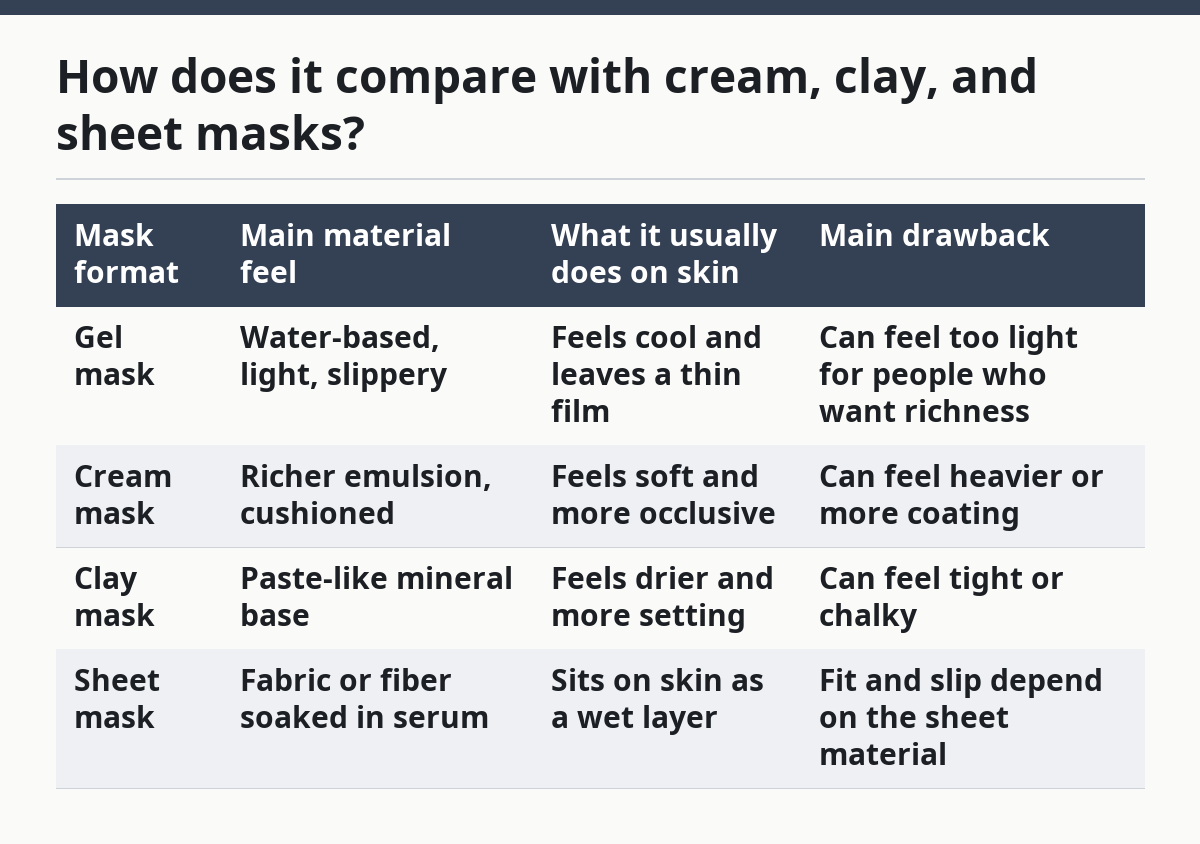
The comparison that matters most is not “which is best,” but “what does the reader want the skin to feel like for 10 to 20 minutes.” A gel mask is the lightest-feeling choice in many lines because the material itself carries less weight. A cream mask usually gives the richest sense of cushion. A clay mask gives the most setting feel. A sheet mask gives a wet, covered feel because the fabric holds the serum against the face.
That is why a generic article gets this topic wrong when it talks only about ingredients and skips the format. The material format is the part the user feels first. If that part is ignored, the reader cannot tell why one mask seems cooling, another seems rich, and another seems tight.
What should you expect from the finish?
A gel face mask usually leaves a lightweight finish because the formula is built to feel thin, fresh, and flexible. That finish is one of the format’s biggest draws, and it is also its main limitation. If a person wants a heavy, coated feeling, gel will often seem too spare.
The finish can be useful when the skin already feels warm, greasy, or easily overwhelmed by thicker products. A gel mask tends to sit with less bulk, so it is often chosen for a cleaner after-feel. That lighter finish is different from the residue left by cream masks, which can feel more emollient, and from clay masks, which can leave skin with a drier touch.
A light finish does not mean a weak product, but it does mean a different experience. Gel masks are a poor fit for anyone who equates “effective” with “thick and heavy.” They are also not the obvious choice for someone who wants a mask to feel rich from the first swipe to the final rinse.
The format is useful when the goal is a fresh surface feel, a cooler touch, and a film that does not seem greasy. It is less useful when the goal is deep cushioning or a very occlusive layer.
When is gel the wrong format?
Gel is the wrong format when the user wants a rich, cushiony mask or a dense barrier feel. That is the clearest limit of the material. The light structure that makes gel feel cool and fresh also keeps it from feeling substantial in the way a cream mask does.
It is also not the best format for someone who expects a mask to cling with body the way a clay mask does. Gel has slip, not drag. It spreads easily and often feels more watery than dense. If the reader wants a heavier material that stays obvious on the skin, gel can feel underwhelming rather than elegant.
Because gel masks are built around water and polymer gels, they can feel less forgiving if the user is looking for a very rich, sealed-in finish. The format can seem “too light” even when the formula is well made. That is a mismatch between texture and expectation, not a flaw in every case.
This is also why gel masks should not be picked only because they are trendy or because the word “cooling” sounds gentle. Format should match the skin feel the reader wants, not the label style.
How do you tell a true gel formula from marketing copy?
A true gel formula usually lists a water-based base and a gelled texture that feels clear, slippery, or jelly-like. The proof is in the structure, not in the front label. If the product is called a gel mask but behaves like a cream in the jar, it may be a hybrid formula rather than a classic gel mask.
The easiest clue is the finish on skin after about 10 minutes. A gel mask tends to keep its thin-film feel. A cream mask tends to stay richer. A clay mask tends to set firmer. A sheet mask stays tied to the fabric or fiber, which is part of the format itself.
That matters because the material format sets expectations before ingredients do. A reader who understands the difference can shop or compare with a lot more confidence. The format tells you how the mask will feel, how it will sit, and what kind of residue it is likely to leave.
For a basic reference on cosmetic format and labeling, the FDA’s cosmetics information page is a useful starting point, and the American Academy of Dermatology also covers face mask use and skin comfort on its site. For ingredient safety and formulation context, the FDA cosmetics page and the American Academy of Dermatology face mask guidance are useful external references.
What is a gel face mask?
A gel face mask is a face mask made in a water-based gel format rather than a cream, clay, or sheet form. The gel structure gives it a lighter, cooler, and more slippery feel on skin. That is what makes it a different material format, not just a different name.
Why do gel masks feel cooling?
Gel masks feel cooling because they are water-heavy and often contain cooling agents. Water transfers heat differently from a richer cream base, so the first touch feels fresh and light. The cooling sensation is about the formula structure, not just a scent or a marketing claim.
Are gel masks the same as cream masks?
No, gel masks are not the same as cream masks. Cream masks are usually richer and more occlusive, while gel masks are lighter and leave a thinner film. The two formats can overlap in benefits, but they do not feel or behave the same way on skin.
Drafted with AI; not yet reviewed by a person.
Leave a Reply