


Last updated: November 18, 2026
In short: choose a sheet mask if you want fast, low-mess hydration; choose a cream mask if you want richer leave-on comfort and a softer finish; choose a clay mask if your main goal is oil control and a cleaner, drier feel. For most routines, the best single pick is a cream mask, because it covers the widest middle ground without the drip of a sheet mask or the tight, drying feel of clay.
Key takeaways
- Sheet masks are the easiest fit when time is short and cleanup matters more than deep treatment.
- Cream masks suit people who want a cushioned, hydrating finish and do not mind wiping or rinsing.
- Clay masks win when shine and surface oil are the main problem, but they can leave skin feeling stripped.
- Gel masks sit closer to cream masks than clay masks; they are useful when a lighter, cooler feel matters.
- The right format is less about “best mask” and more about how much mess, wait time, and residue your routine can handle.
What is the real difference between these mask formats?
The real difference is how each format sits on skin, how much cleanup it needs, and what feeling it leaves behind. Sheet masks work by holding serum against the face under occlusion, cream masks leave a richer layer on skin before removal, and clay masks dry down into a firm layer that is then rinsed off.
That difference changes the routine, not just the texture. A sheet mask usually asks for 10 to 20 quiet minutes and little cleanup beyond removing the sheet and patting in the leftover serum. A cream mask often asks for a similar wait, but it can feel heavier and may need wiping or rinsing. A clay mask is the least forgiving on timing because once it dries, the finish gets tighter and cleanup becomes a full rinse.
For a broad, routine-first overview of mask categories, the hub on face mask formats and use-cases sits above this page. This article stays on the comparison itself: finish, cleanup, time needed, occlusion, and hydration feel.
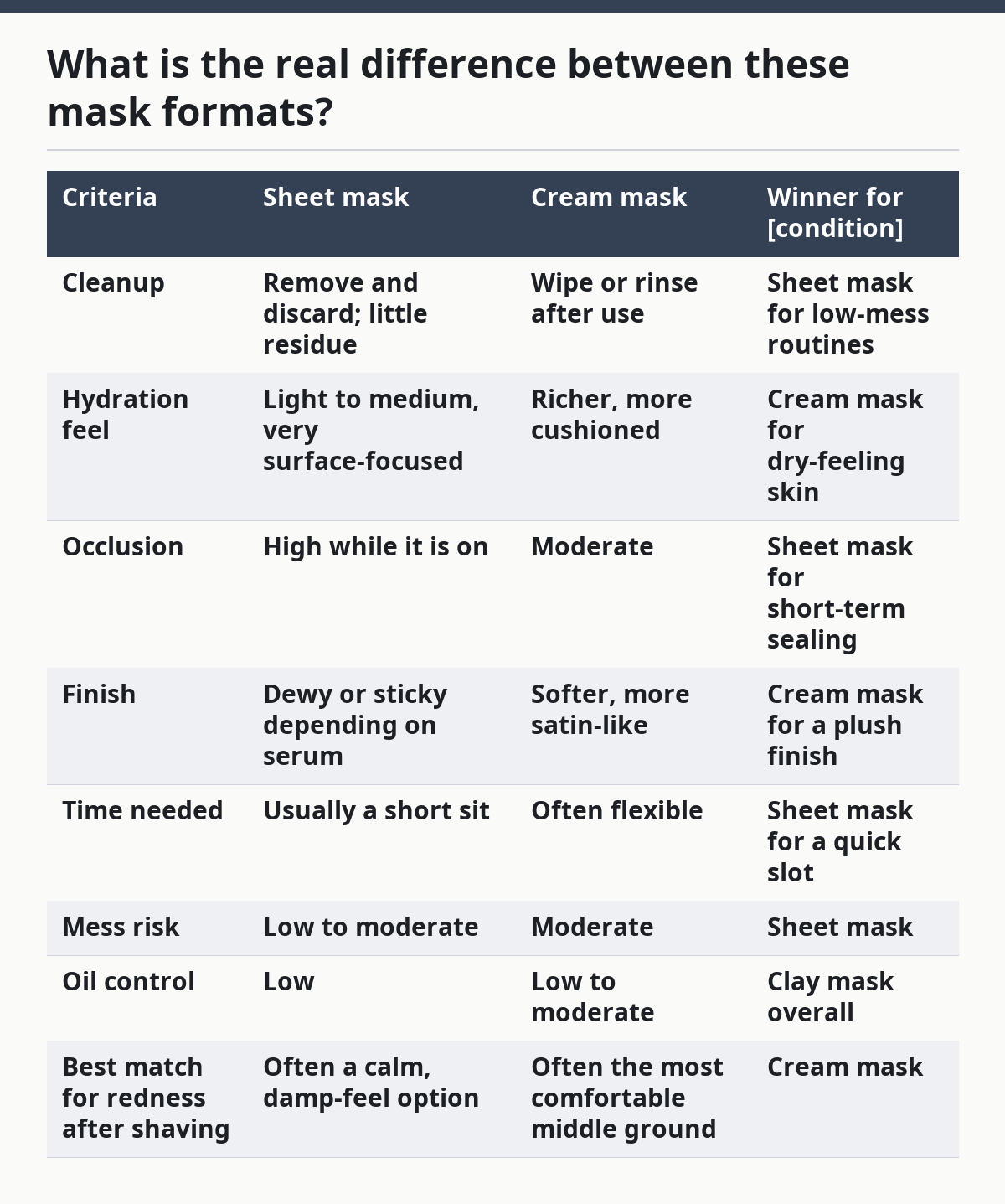
| Criteria | Sheet mask | Cream mask | Winner for [condition] |
|---|---|---|---|
| Cleanup | Remove and discard; little residue | Wipe or rinse after use | Sheet mask for low-mess routines |
| Hydration feel | Light to medium, very surface-focused | Richer, more cushioned | Cream mask for dry-feeling skin |
| Occlusion | High while it is on | Moderate | Sheet mask for short-term sealing |
| Finish | Dewy or sticky depending on serum | Softer, more satin-like | Cream mask for a plush finish |
| Time needed | Usually a short sit | Often flexible | Sheet mask for a quick slot |
| Mess risk | Low to moderate | Moderate | Sheet mask |
| Oil control | Low | Low to moderate | Clay mask overall |
| Best match for redness after shaving | Often a calm, damp-feel option | Often the most comfortable middle ground | Cream mask |
Why does a sheet mask fit some routines so well?
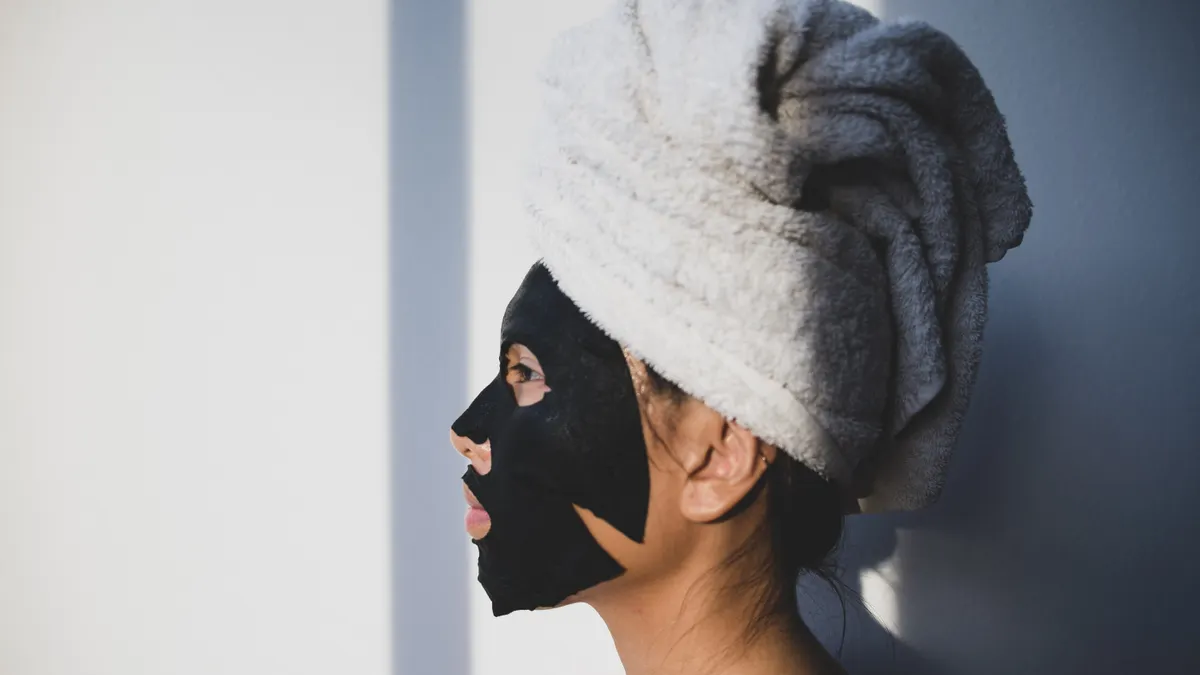
A sheet mask fits a routine that needs speed, occlusion, and almost no cleanup. It is the easiest option to slot into an evening when there is only one free window of time and the rest of the routine has to stay simple.
The main strength is contact. Because the sheet sits over the face, the formula stays on skin instead of evaporating quickly. That can make the skin feel more hydrated right away, which is one reason sheet masks are often chosen after shaving irritation or on days when skin feels tight. The trade-off is obvious: that same sealed-in feel can be sticky if the serum is heavy, and the result often sits on the surface rather than changing how the skin behaves long term.
This format is a poor fit for anyone who hates discard waste, dislikes slippery edges, or wants a treatment that feels invisible. It is also not the best choice if the goal is oil control, since sheet masks are built for moisture delivery, not for absorbing shine. The American Academy of Dermatology notes that skin care choices should match skin type and sensitivity, and a sheet mask is usually the most “feel good now” option, not the most corrective one.
When does a cream mask win?
A cream mask wins when the goal is comfort, not cleanup speed. It gives the most forgiving middle ground because it can feel soothing without the tight, drying end point of a clay mask.
That matters in a real routine. A cream mask can be left on, wiped off, or rinsed depending on the formula directions, so it tends to fit people who want fewer sharp edges in their skin care. The finish is usually softer and less shiny than a sheet mask, and the hydration feel is often fuller. For anyone dealing with redness after shaving, that cushioned feel is a strong reason to choose cream first.
The downside is equally practical. Cream masks can feel heavy on oily skin, and the residue can be annoying if a routine needs to end fast. They are also not the best pick for someone who wants a crisp matte finish or who dislikes any product left behind before bed. A cream mask is the format for people who want the routine to feel calm and low-friction, but not bare.
Where does a clay mask actually win?
A clay mask wins when the main issue is surface oil, visible shine, or the need for a drier finish. No other common format in this comparison does the same job as well, because clay is built to set on skin and absorb as it dries.
The appeal is simple: the finish feels cleaner and less cushioned, which some routines need. That can make it useful on oilier zones or on days when skin feels coated rather than dry. The problem is just as simple. Clay can pull the skin toward a tight finish, and that can be a bad match for skin that is already irritated, freshly shaved, or naturally dry. The British Association of Dermatologists and the NHS both advise being cautious with skin products that aggravate dryness or irritation, which is exactly the kind of problem clay can create if used in the wrong situation.
Clay is also the most timing-sensitive of the three. Letting it dry fully can make it feel harsher, while removing it too soon can defeat the point of using it. It is not the right buy for someone who wants comfort first, or for anyone who wants the mask to double as a hydration step.
Which one is best for your routine?
The best single choice for most people is a cream mask, because it balances comfort, finish, and routine fit better than the other two. It is the least extreme option: more comfortable than clay, less fussy than a sheet, and usually easier to live with than either if the goal is a routine that feels good on ordinary days.
Here is the shortest decision rule. Choose sheet if you want the fastest path to a hydrated feel with very little cleanup. Choose cream if you want the broadest middle ground and the softest finish. Choose clay if your routine is built around oil control and you can tolerate a drier, tighter result.
Pros and cons by format
Sheet mask
- Pros: quick, low-mess, strong occlusion, easy to fit into a short routine
- Cons: can feel sticky, usually not ideal for oil control, creates more packaging waste
- Best for: people who want a fast hydration step and minimal cleanup
- Skip it if: you hate residue or want a richer, more cushioned finish
Cream mask
- Pros: soft finish, flexible removal, comfortable for dry or post-shave skin
- Cons: can feel heavy, still needs cleanup, not built for matte results
- Best for: people who want the most comfortable all-around option
- Skip it if: you want a very fast, no-rinse routine or a dry finish
Clay mask
- Pros: strongest fit for oil control, cleaner finish, useful when skin feels shiny
- Cons: can feel tight, less hydrating, easy to overdo on sensitive skin
- Best for: people who want a drier, clearer-looking finish
- Skip it if: your skin is already dry, irritated, or freshly shaved
What should make you change your mind?
A clay mask should move up your list if oil is the real problem, not hydration. If the skin feels greasy by midday and the goal is a less shiny finish, a cream mask is not the right tool and a sheet mask may feel too slick.
A sheet mask should move up your list if cleanup is the deciding factor. If the routine happens between other tasks, or if a person wants to sit still for a short window and then move on, the sheet format is easier to live with than a cream mask that needs removal.
A cream mask should move up your list if skin feels sensitive, tight, or post-shave. That is the situation where the extra cushioning matters most. A clay mask is the wrong choice there, and a sheet mask can be too wet or sticky depending on the formula.
The format should also change if the face product has to do double duty. A clay mask is rarely the answer when the aim is comfort plus hydration. A sheet mask is rarely the answer when the aim is a polished, less dewy finish. A cream mask sits in the middle, which is why it ends up as the default recommendation.
Which one should you buy first?
Choose cream mask if your skin gets red after shaving, if you want one format that fits most routines, or if you dislike both drip and tightness. Choose sheet mask if you want the quickest hydration step and the cleanest finish after use. Choose clay mask if shine control matters more than comfort. Neither if your skin is already very irritated, because any mask can be the wrong move when the skin barrier is upset.
Which face mask format is best for beginners?
Cream mask is the safest first pick for beginners. It is usually the easiest to understand because it does not demand exact timing the way clay does, and it does not leave the same slippery after-feel that some sheet masks do. The downside is simple: it can feel heavier than expected, so anyone who dislikes residue may still prefer a sheet mask.
Which mask is easiest to remove?
Sheet mask is the easiest to remove. The sheet comes off in one step, and the remaining product usually only needs patting or light cleanup. Cream masks take more effort because they often need wiping or rinsing, while clay masks require the most cleanup because the dried layer has to be fully washed away.
Which format is most hydrating?
Sheet mask is usually the most hydrating-feeling format right away, while cream mask often feels the most comfortable over the full routine. The sheet’s occlusion helps the skin feel loaded with moisture fast, but cream often leaves a softer finish with less stickiness. Clay is the least hydrating of the three and is not the right pick when hydration is the main goal.
Sources to consult
For skin-sensitivity basics, the American Academy of Dermatology has practical guidance on skin care for different skin types. The NHS and the British Association of Dermatologists also publish plain-language advice on irritation, dryness, and when to be cautious with face products.
Drafted with AI; not yet reviewed by a person.

Leave a Reply