



Last updated: November 18, 2026
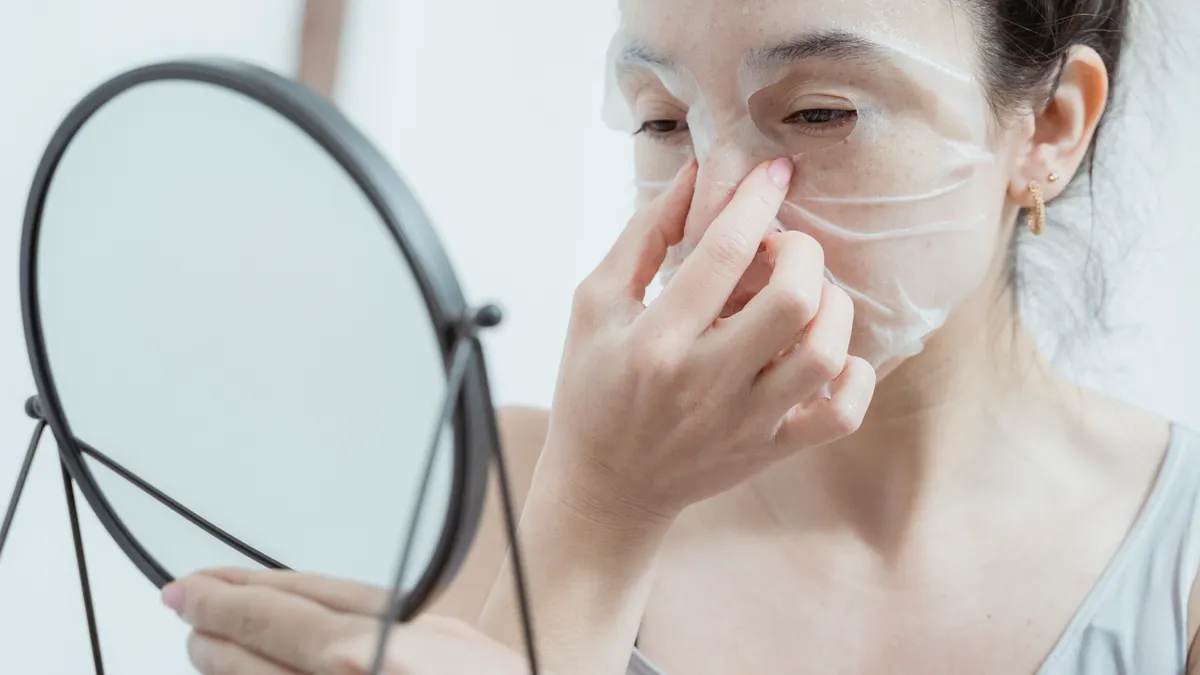
Quick answer: most face masks stay on skin for about 10 to 20 minutes, while overnight masks are designed to stay on for several hours. How long should different face mask formats stay on the skin depends on the format, not the jar, and the label matters most. Sheet masks are brief, clay masks are short and drying, cream and gel masks often sit a little longer, and overnight masks are left on through sleep because that is the point of the format.
Key takeaways
- Sheet masks are a short-wear format, not a leave-on treatment; if you are unsure, check the label or ask a dermatologist.
- Clay masks are the most timing-sensitive because they can dry out the skin if left too long; if you have reactive skin, consult a professional.
- Cream and gel masks usually give more room, but they are still not “leave on forever” products.
- Overnight masks are the exception: they are made to stay on longer than a standard mask.
- If a mask feels tight, stings, or flakes hard, the problem is usually wear time, not patience.
What is the wear time for each face mask format?
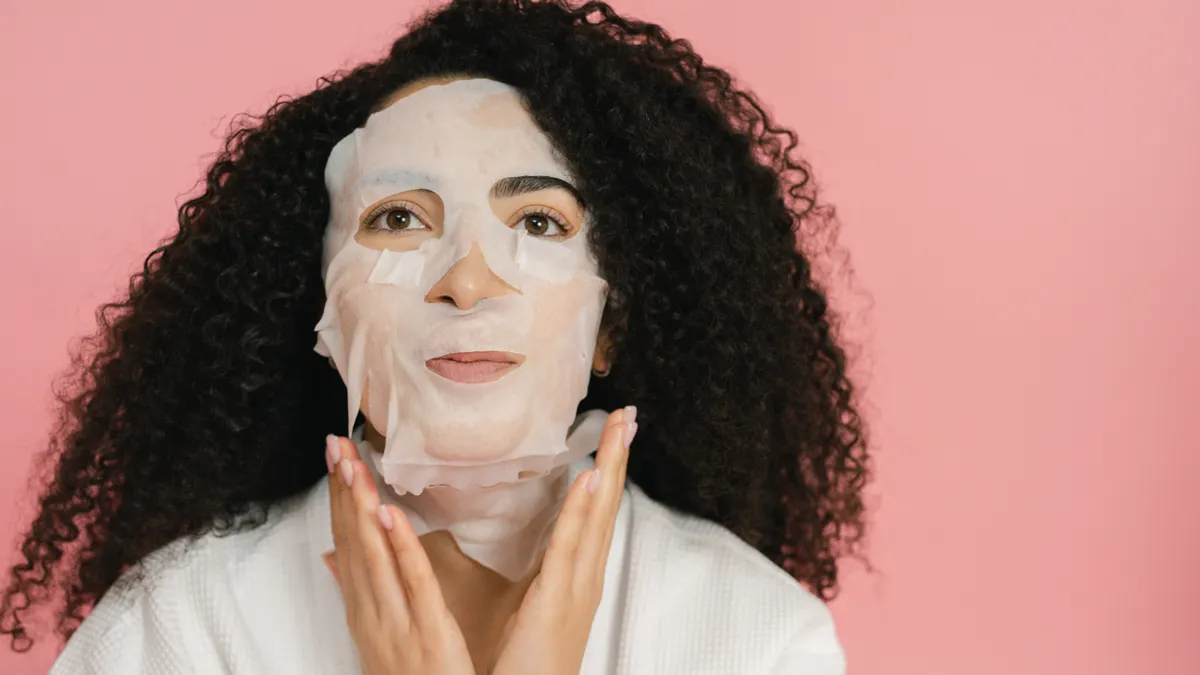
The wear time for each face mask format is different, and the label on the package matters more than a rule of thumb. A sheet mask may be on for about 10 to 20 minutes, while a clay mask is usually removed before it fully cracks hard. Cream and gel masks often stay on longer than a sheet mask, and overnight masks are designed to stay on until morning.
| Face mask format | Typical wear-time pattern | What matters most |
|---|---|---|
| Sheet mask | Short wear | Remove before it dries out on the face |
| Clay mask | Short, timed wear | Stop before full dryness pulls the skin |
| Cream mask | Moderate wear | Follow the product’s leave-on window |
| Gel mask | Moderate wear | Watch for slip, tack, or drying |
| Overnight mask | Long wear | Formulated for leave-on use |
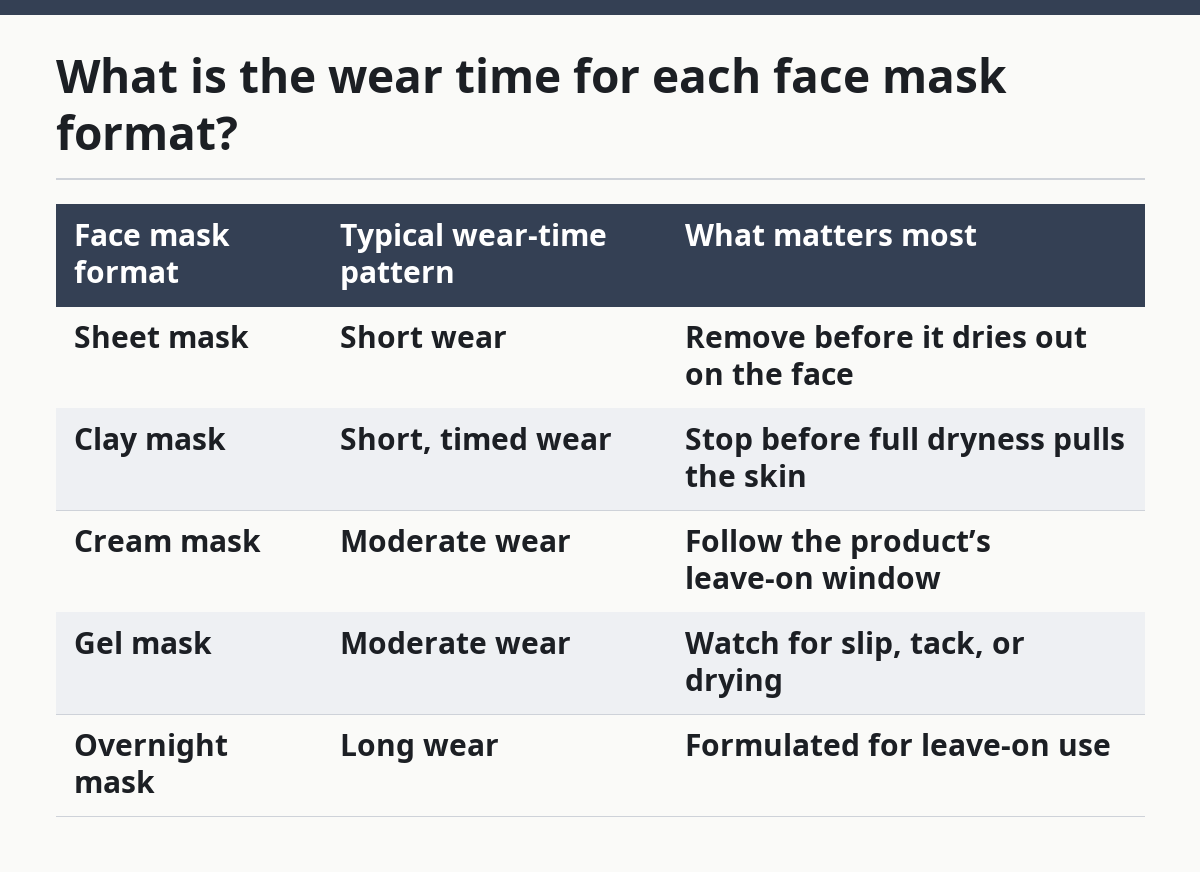
This table is the simplest way to think about face mask wear time. The format tells you the general window, but the product directions decide the final answer. A rich cream mask from one brand may sit for 10 minutes, while a gel mask from another may be meant to stay on longer.
The biggest mistake is treating every mask as if it works like a clay mask, which can be a problem for sensitive skin; if you are unsure, consult a professional. That habit can lead to overdrying, tight skin, and waste. The opposite mistake is leaving a mask on because it still feels “nice,” which can be a bad idea if the formula is meant to be rinsed off.
How do I tell when a mask is done?
A mask is done when the package time has passed or the mask has reached the texture the label describes, such as partly set, mostly absorbed, or still damp but ready to remove. For most sheet masks and many cream or gel masks, the clue is time, not how dry the surface looks.
This is where many people get tripped up. A mask that feels soothing at minute 5 may feel less helpful at minute 25. The skin can start to feel tight once water evaporates from the formula or once the active layer sits too long.
A simple way to judge the finish is to ask three questions:
- Has the package time elapsed?
- Does the mask type expect removal, like a sheet or clay mask?
- Does the skin feel calm, or does it feel tight, stingy, or papery?
If the answer to the third question is negative, the mask has likely stayed on long enough. Tightness is not a sign of better results. It is a sign to stop.
For reference, skin-care guidance from organizations such as the American Academy of Dermatology and the U.S. Food and Drug Administration emphasizes reading product directions and paying attention to irritation. The FDA’s cosmetics page is a useful starting point: https://www.fda.gov/cosmetics. The American Academy of Dermatology also advises stopping use if irritation develops: https://www.aad.org/public/everyday-care/skin-care-basics
How long does each format usually stay on?
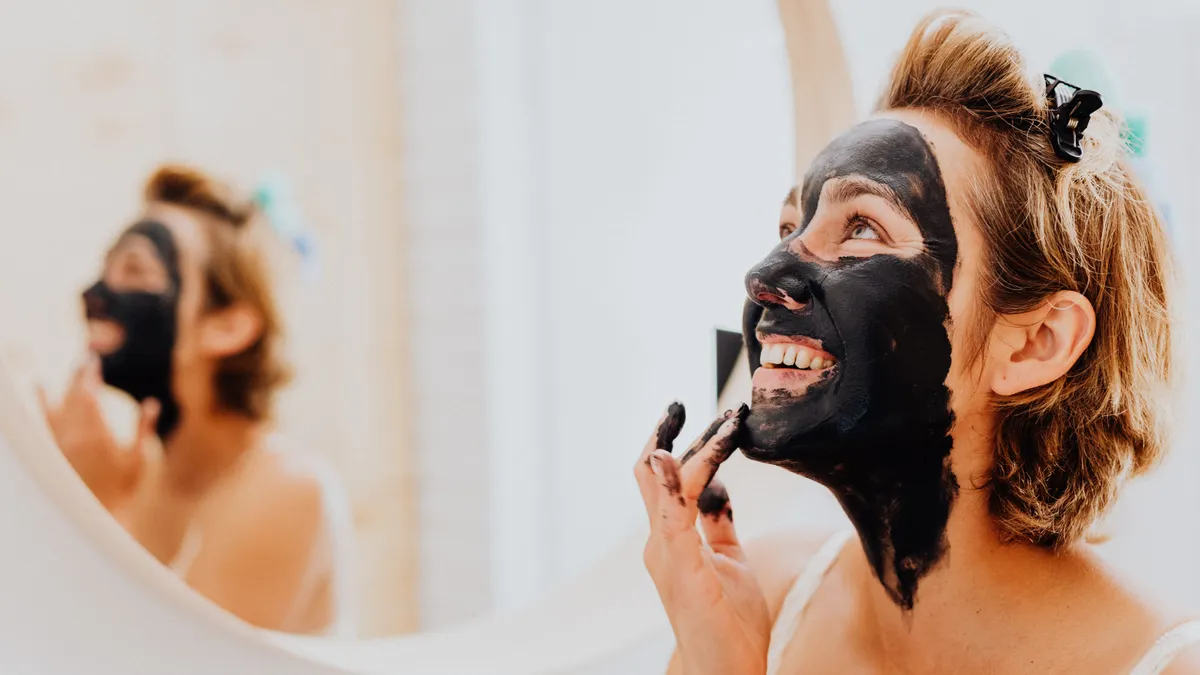
Each format has a different timing pattern, and a beginner gets into less trouble by matching the mask to the clock. Sheet masks are often the shortest, clay masks are commonly removed before complete drying, cream and gel masks tend to sit in the middle, and overnight masks are the only ones made for a long wear window.
| Format | General timing pattern | Main risk if left on too long |
|---|---|---|
| Sheet mask | Short | Dry, papery sheet; skin feels clingy |
| Clay mask | Short and fixed | Tightness and surface dryness |
| Cream mask | Medium | Heavy residue or irritated skin |
| Gel mask | Medium | Overwear if the product starts to dry down |
| Overnight mask | Long | Only a problem if the skin does not tolerate leave-on layers |
A clay mask is the one format people overdo most often. It can seem harmless to leave it on “until it’s fully dry,” but that full-dry stage is usually the point where the face starts to feel stripped. Cream masks are gentler in feel, yet that does not mean they belong on the skin all day.
Gel masks sit in a strange middle ground. They often feel cooling and watery at first, so people let them stay on longer than the label intends. That can be fine if the product is meant for a longer wear window, but it is not a free pass.
For a reader whose main concern is redness after shaving, shorter wear is usually safer than longer wear. Freshly shaved skin can react to friction, fragrance, or strong active ingredients faster than untouched skin. A plain, non-stinging formula with a controlled wear time is the safer match than a mask that asks for a long sit.
How do I apply and remove a mask without wasting the wear time?
A mask works best when it is applied evenly, timed from the start, and removed before the formula has crossed its finish line. The goal is not to squeeze out every extra minute; the goal is to get the intended effect without pushing the skin into dryness or irritation.
Follow this order:
- Clean the face and pat it dry. A damp, dripping face can make a mask slip, especially a sheet mask.
- Open the mask and smooth it into place. Good contact matters because uneven contact creates dry patches.
- Set a timer for the package window. A phone timer is enough; guessing is not.
- Watch the texture, not just the clock. A clay mask should not turn brittle, and a sheet mask should not turn papery.
- Remove the mask or rinse it off when the time ends. That leaves the skin calmer and avoids the stale, overworked feel that comes from leaving it too long.
This routine sounds basic, but it solves most timing mistakes. A timer protects the skin from the “just a few more minutes” problem. It also keeps the result more predictable, especially when trying new formats like gel or cream masks.
The one thing to avoid is stretching the wear time because the mask still feels wet. Wet does not mean useful. Past the intended window, a formula can shift from helpful to merely sitting there.
What goes wrong when a mask stays on too long?
A mask that stays on too long can dry the skin, irritate it, or leave it feeling tight and dull instead of calm and refreshed. The exact problem depends on the format, but the common thread is that the skin gets less comfortable once the product is past its intended wear time.
The cost of over-wearing a mask is not just discomfort. With clay masks, the skin can feel stripped and thirsty. With sheet masks, the sheet itself can become a dry layer that starts pulling moisture back from the skin surface. With cream or gel masks, extra time can leave a heavy film or trigger irritation if the formula is not meant for long wear.
Here is the practical trade-off:
- Shorter wear gives a cleaner, safer result.
- Longer wear may seem more thorough, but often adds dryness rather than benefit.
That trade-off matters even more on skin that is already reactive. Redness after shaving is a common example. A mask that is too strong or left on too long can turn a mild flush into a more obvious sting.
The plain rule is this: once the mask has done its job, take it off. More time is not the same as better skin care.
Which face mask formats are not for long wear?
Sheet masks and clay masks are not for long wear, and they are the formats most likely to cause trouble if they are left on because they feel harmless. A clay mask in particular has a narrow timing window, while a sheet mask can go from soothing to dry and clingy faster than many people expect.
This is one clear way to separate the formats:
- Sheet masks: short, timed use
- Clay masks: short, watch closely
- Cream masks: moderate wear, often more forgiving
- Gel masks: moderate wear, depending on the formula
- Overnight masks: the long-wear option by design
That means the safest move is not to classify all masks together. A 15-minute sheet mask and a cream mask that sits longer are not the same product category. Using the same time for both is where mistakes start.
This is also the section where a generic article often fails. It says “follow directions,” but gives no help on why directions vary. The real answer is that the formula changes how long it can stay comfortable on the skin. Clay pulls moisture in a way that demands a short window. Cream and gel formulas can be kinder, but only within the product’s own limits.
For readers who are trying to soothe redness after shaving, that difference is the whole game. A shorter, milder mask usually makes more sense than a long-wear mask with a strong active feel.
Can the skin tell you when to stop?
Yes, the skin can tell you when to stop, and that warning is often faster than the clock. Stinging, itching, strong tightness, or a dry, cracking feel are signs that the mask has gone on long enough, even if the package time is not finished yet.
This matters because timing advice is a guide, not a dare. Some skin reacts quickly to fragrance, acids, clay, or even a harmless-feeling gel formula. Freshly shaved skin can be even more sensitive, so the stop signal may come early.
Look for these signs:
- The mask feels hot or itchy.
- The skin starts to sting.
- A clay mask becomes hard and brittle.
- A sheet mask turns dry and papery.
- A cream mask leaves a heavy, uncomfortable layer.
If any of those happen, remove the mask right away. Waiting for the “correct” minute is less useful than listening to the skin that is already reacting.
A good mask should feel like a temporary treatment, not a test of endurance, and if you are uncertain about a reaction, consult a professional.
Can you leave a face mask on too long?
Yes, leaving a face mask on too long can dry or irritate the skin, depending on the format. Clay and sheet masks are the most likely to become uncomfortable past their window, while cream and gel masks can leave a heavy or stale feel. If the skin starts to sting, feel tight, or look papery, the mask has stayed on long enough.
Do different masks have different wear times?
Yes, different masks have different wear times because the formulas do different jobs. Sheet masks and clay masks are usually short-wear formats, cream and gel masks tend to sit a bit longer, and overnight masks are made to stay on for an extended period. The package directions usually outrank a general guess.
What happens if a mask dries completely?
If a mask dries completely, the skin often feels tighter and less comfortable afterward. That is especially true with clay masks and sheet masks, which can stop being soothing once all the moisture is gone. A completely dry mask is usually a sign to remove it rather than keep waiting for more benefit.
If one rule is worth keeping, it is this: use the shortest wear time that fits the format and the label, not the longest one your patience allows.
Drafted with AI; not yet reviewed by a person.



Leave a Reply