



Last updated: November 19, 2026
Silicones in face masks mostly change how the formula spreads, sits, and dries on skin. They usually make a mask feel slipperier, smoother, and more even, while also helping it leave a more noticeable film on the face. That can be a good thing in a cream mask or gel mask, but it is not ideal for every skin type or every use.
Key takeaways
- Silicones mainly affect the way a mask feels during application and while it is on skin.
- Dimethicone is a common silicone used for slip, a soft finish, and a light barrier feel.
- A silicone-rich mask can feel less sticky and less draggy than a similar formula without silicones.
- The same film that makes wear feel smoother can also make some people feel coated or warm.
- Cream masks usually use silicones differently from gel masks, so the same ingredient can feel very different from one formula to another.
What do silicones do in a face mask?
Silicones in a face mask change the texture, glide, and after-feel more than they change the basic job of the mask. They help the formula move across skin with less drag, so the layer goes on more evenly with a brush, spatula, or fingertips.
Dimethicone is the name people see often. It acts as a slip agent and film former, which means it can make the mask feel smoother during spread and leave a soft, protective layer after application. In many formulas, that layer is part of the point. It can slow water loss at the skin surface and keep the mask from feeling tacky as it sets.
That film effect is useful in both cream masks and some gel masks. A cream mask with silicones may feel richer and less greasy than one built only from oils. A gel mask with silicones may feel less watery and less likely to pull as it dries. The trade-off is simple: more slip and a cleaner finish can also mean a more obvious coated feel.
For readers shopping for a mask to soothe post-shave redness, that coated feel can be a plus if the skin feels raw. It can also be a minus if the skin feels hot, itchy, or easily congested. The ingredient does not tell the whole story by itself; the full formula matters.
Two useful reference points for the ingredient are FDA cosmetic ingredient guidance on silicones and the PubChem entry for dimethicone. Those sources help confirm that silicones are common cosmetic materials, not odd add-ons.
How do silicones change feel on skin?
Silicones change feel on skin by reducing drag, reducing tack, and making the surface feel more even. That is why a mask with dimethicone often feels faster to spread than a formula built mostly from humectants and plant oils.
The most obvious change is slip. Slip is the glide you feel when the product moves under the fingers instead of catching. In a face mask, that matters because a patchy spread can feel rougher and can also leave thin and thick zones on the face. A silicone blend can help the mask lay down in a more uniform film.
The second change is finish. Some formulas dry down to a satin feel rather than a sticky one. That can matter if the mask is meant to stay on for 10 to 20 minutes while a person walks around the house, answers a door, or sits at a desk. A smoother finish often feels less noticeable.
The third change is the barrier-like feel. Silicones do not act like a heavy wax, but they can make the skin feel covered. On shaved skin, that can be helpful because freshly shaved areas often sting when water evaporates too fast. A thin film can make the mask feel calmer. On very oily skin, the same film can feel too occlusive.
The same point cuts both ways: if a person wants a mask that feels airy and vanishes fast, silicones may feel like too much. If a person wants less friction and less rub, silicones are usually part of the solution.
Which masks use them best?
Silicones tend to work best in masks that need a smooth spread and a soft finish, especially cream masks and certain gel masks. They are less helpful when a brand wants a very powdery, ultra-matte dry-down.
| Mask type | What silicones change | How it usually feels | Best for | Less ideal for |
|---|---|---|---|---|
| Cream masks | Improve glide and make the base feel richer without as much greasy drag | Plush, cushioned, more coated | Dry or post-shave skin | People who dislike a film |
| Gel masks | Reduce tack and help the gel feel less watery | Cool, slick, then smoother | Skin that wants light wear | People who want a bare-skin finish |
| Silicone-heavy formulas | Create strong slip and a more obvious surface layer | Very smooth, more slip, less drag | Areas that sting from friction | Very oily-feeling preferences |
| Silicone-light formulas | Rely more on water, humectants, and oils | Less coating, sometimes more grab | People who dislike film | Skin that needs more cushion |
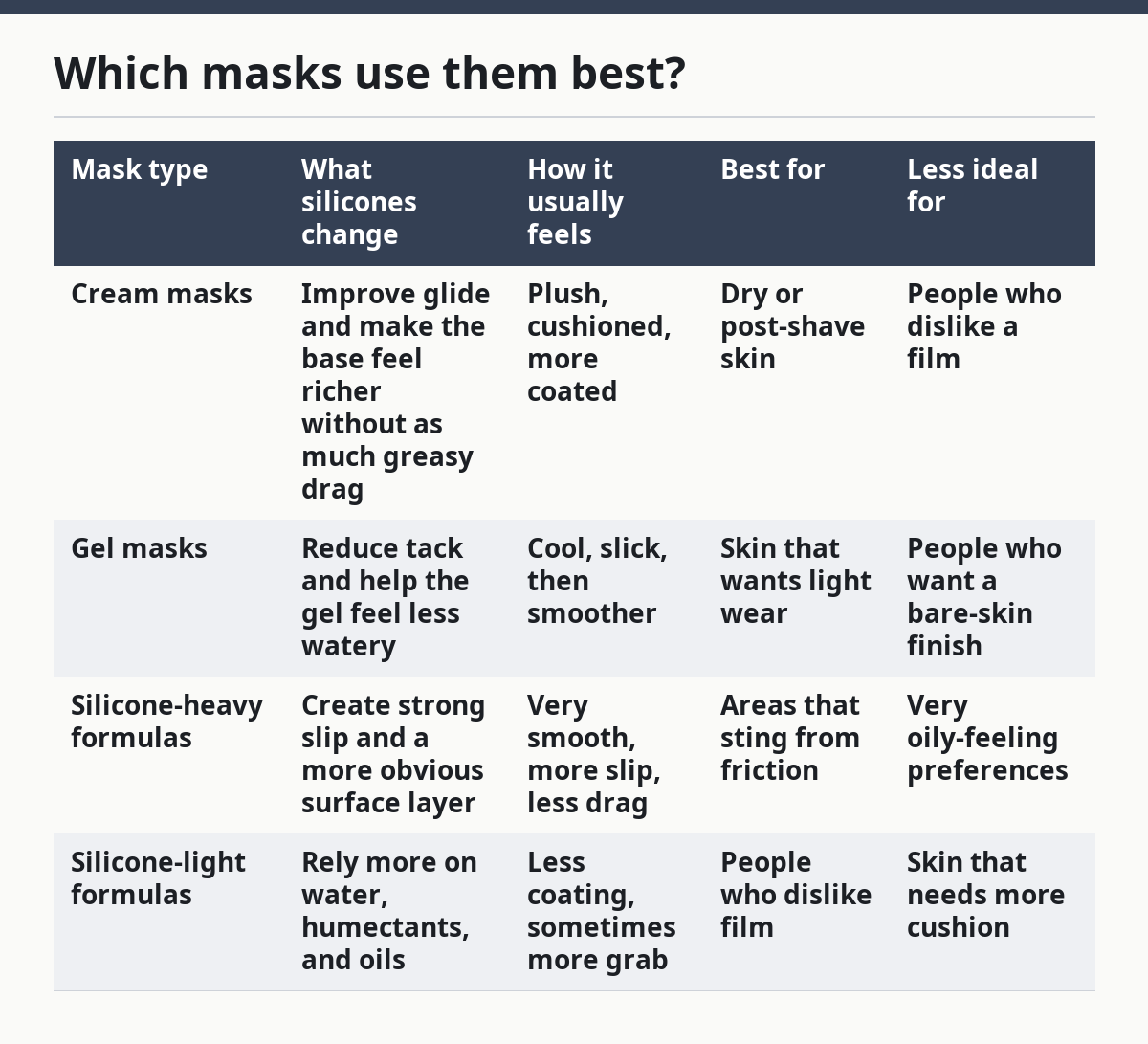
This is why two masks can both say “soothing” and still feel different. One may use dimethicone for a cushioned, polished finish. Another may lean on water and glycerin-like ingredients and feel wetter, then slightly tackier as it sits. The same label word does not tell the whole wear story.
Silicone blends matter too. A single silicone can feel different from a mix of silicones plus emollients and film formers. The blend can make a cream mask feel rich without turning greasy, or make a gel mask feel slick without feeling wet. That is the real formulation trick, not silicone alone.
How can a reader judge a silicone mask before buying it?
A reader can judge a silicone mask by looking at where the silicone sits in the ingredient list, then matching that to the kind of wear they want. This takes about 30 seconds and saves a lot of guesswork.
- Find dimethicone or another silicone near the front, middle, or end of the ingredient list. A higher spot usually means the formula uses it more heavily, which often means more slip and a more obvious film.
- Check the mask type: cream masks usually feel fuller on skin, while gel masks usually feel lighter and cooler. The same silicone amount will not feel the same in both bases.
- Think about your main problem. If the issue is friction after shaving, a smoother, less draggy feel is useful. If the issue is hating any coated feeling, a silicone-heavy mask may annoy you even if it spreads well.
- Look for what else is in the formula. Humectants, oils, and fragrance all change wear. A silicone can soften the feel, but it does not erase a strong scent or a heavy oil phase.
- Decide how long the mask needs to sit on skin. A 10-minute mask and a longer-wear mask can feel very different, because film formers and silicones become more noticeable with time.
That simple check helps more than chasing a single ingredient. A mask with dimethicone high on the list may feel cushiony and polished. A mask with silicones lower down may still feel smooth, but it will usually leave less of that wrapped, coated sensation.
One useful habit is to judge the finish, not the promise. Phrases like “silky,” “soft-focus,” or “skin-like” often point to silicones or similar film-forming systems. Those words say more about wear than about treatment claims.
What are the trade-offs?
Silicones improve wear, but they can also make the formula feel too sealed or too slick for some people. That is the main trade-off, and it shows up most clearly when skin is hot, oily, or already coated with other products.
The upside is easy to feel. The mask spreads with less pulling, gives a more even layer, and often dries to a smoother finish. For skin that stings after shaving, that can be welcome because less rubbing usually means less discomfort. A film can also make the mask stay put better on moving areas like the cheeks and jaw.
The downside is also easy to feel. Some people read that film as “heavy,” even when the formula is not oily. Others feel trapped under it after a few minutes. If skin is acne-prone or very reactive to occlusion, a silicone-rich mask may be the wrong comfort profile even if it is not automatically a problem ingredient.
This is why silicones are not a simple yes-or-no story. They are a texture tool. In a good formula, they make the mask easier to apply and nicer to wear. In the wrong formula for the wrong person, they can make the mask feel like a layer that sits on top instead of blending in.
For readers choosing a mask for post-shave redness, the best match is usually the one that reduces friction without making skin feel smothered. That balance is the real target.
Who are silicones not for?
Silicone-heavy masks are not for people who want a very light, almost bare-skin finish. If the goal is to forget the product is there within a few minutes, a strong silicone film can feel like too much.
They are also not the first choice for anyone who hates a polished or coated feel. Some formulas make skin feel smooth in a way that is pleasant; others make it feel almost sealed. The difference can be subtle on paper and obvious on the face.
If a person already knows that a rich cream mask feels too occlusive, a silicone-heavy version will probably not solve that complaint. If a person wants less drag and less sting after shaving, it may help a lot. The better question is not “Are silicones good?” but “What kind of wear does this formula create?”
Two good outside references for this topic are the FDA’s cosmetic ingredient information and PubChem’s dimethicone page. They are useful for confirming what silicones are, while the real buying decision still comes down to feel and finish.
Are silicones comedogenic in face masks?
Silicones are not automatically comedogenic in face masks. They often feel occlusive because they form a film, but that is not the same thing as clogging pores. The rest of the formula matters more than the silicone name alone, and a person with acne-prone skin may still prefer a lighter wear profile.
Do silicones make masks feel smoother?
Silicones usually make masks feel smoother. They reduce drag, add slip, and help the product spread in a more even layer across skin. Dimethicone is the ingredient many people notice here, especially in cream masks and some gel masks that need a polished finish.
Why do some masks use silicones?
Some masks use silicones because they improve application and change the finish. They help the formula feel less sticky, less rough, and more even on skin. In wear terms, that can make a mask easier to keep on for 10 to 20 minutes without a tacky or grabby feel.
Drafted with AI; not yet reviewed by a person.



Leave a Reply