


Last updated: October 29, 2026
The right mask depends on two things: what your skin needs right now and when you plan to use it. This guide to mask performance by skin need and moment — The Complete Guide looks at how clay, hydrating, exfoliating, and overnight formulas behave in different situations. A clay mask that clears oil at 8 p.m. can leave a dry cheek sting for the next 12 hours; a creamy overnight mask can calm that same cheek but do little for a shiny T-zone before an event. I write about skincare with a consumer-editor’s eye for ingredients, format, and label claims, and I try to stay practical about what a mask can and cannot do.
Key takeaways
- The best mask is often the one that matches the problem in front of you, not the one with the loudest claim.
- Oil, dryness, dullness, breakouts, redness, and sensitivity each respond to different mask types and contact times.
- Clay and charcoal formulas can help de-grease the face fast, but they are the least forgiving for dry or reactive skin.
- Hydrating cream or gel masks are a common default for many people, especially after sun, travel, shaving, or a long flight.
- Exfoliating masks can brighten quickly, but they are the easiest to overdo if your barrier is already irritated.
- Overnight masks can help when the goal is comfort and bounce by morning; they are not always the best choice for immediate pore-clearing.
- If you have eczema, rosacea, a compromised barrier, or active irritation, a plain moisturizer may be the better “mask” choice.
What “performance” really means for a face mask

Performance means the mask solves the skin problem you actually have today. A formula can be excellent at one job and mediocre at another, so the first mistake is treating all masks as interchangeable. They are not. A clay mask in a 75°F bathroom before a night out performs differently from a cream mask used after a retinoid night or a gel mask packed in a carry-on for a red-eye flight.
The practical way to judge performance is by outcome, not by glamour. If the issue is oil, performance means less shine and a cleaner-looking surface within about 10 to 20 minutes. If the issue is dehydration, performance means less tightness, smoother texture, and fewer fine flake ridges by the next morning. If the issue is dullness, performance means the skin looks more even without a raw or squeaky finish. If the issue is sensitivity, performance means the face feels calmer, not “stripped but polished.”
That is why ingredient family matters more than marketing language. Clay, charcoal, sulfur, AHAs, BHAs, enzymes, humectants, occlusives, and barrier lipids each push the skin in a different direction. A 15-minute kaolin mask, for example, works through oil adsorption; a hyaluronic-acid gel mask works through water binding and occlusion. Those are not the same mechanism, so they should not be expected to deliver the same result.
The other piece people miss is timing. A mask can be “best” for a moment even if it is not “best” for your skin type long-term. A salicylic-acid clay formula may be ideal before a humid evening event, but the wrong call after waxing, exfoliating, or a ski weekend. A ceramide mask may look boring on paper, yet it can outperform everything else when the skin barrier is irritated.
If the label does not say what the mask is meant to do in plain language, that is already a clue. The strongest claims are usually tied to a narrow use case, not to every concern at once. For more on ingredient roles, see the FDA’s cosmetics overview and the American Academy of Dermatology’s skincare guidance. FDA and AAD.
Which mask type fits oily or breakout-prone skin?
Clay and sulfur masks win for oily or breakout-prone skin when the goal is to reduce surface grease fast. Kaolin and bentonite are the names to look for if shine is the main complaint; sulfur is the one to notice when clogged pores and a few angry spots are the issue. These formats are built for speed, which is why they often make the skin look better within a single session rather than after a week of use. For ingredient-level acne context, the American Academy of Dermatology’s acne guidance is a useful reference. AAD acne resource.
The upside is straightforward. A well-matched clay mask can make pores look less crowded, cut the slick look at the nose and forehead, and give makeup a better base a few hours later. Salicylic acid can add a pore-clearing angle because it is oil-soluble and can work where sebum sits. For someone who wakes up shiny by noon, that combination can feel decisive.
- Look for kaolin or bentonite when oil is the main issue.
- Consider sulfur if clogged pores and a few inflamed spots are part of the picture.
- Keep the contact time short if your skin tends to dry out.
- Use the mask on the areas that need it most, not automatically on the whole face.
The downside is just as real: drying and overcorrection. Clay does not know the difference between “excess oil” and “skin that is trying to compensate for being stripped.” If your cheeks feel tight after washing or you already use a retinoid, a high-absorption formula can push you into rebound oiliness or irritation. Sulfur can also smell strong and feel drying, which matters if you want the product to stay on for 10 to 20 minutes in a shared bathroom.
This category is wrong for skin that is inflamed, flaky, or barrier-damaged. It is also the wrong answer if your breakouts are mostly from irritation, not oil. In that case, more stripping usually makes the cycle worse. If you have persistent acne, eczema, rosacea, or skin that stings easily, it is worth checking with a dermatologist before leaning on drying masks. The NHS skin-condition pages and Mayo Clinic’s rosacea guidance are good starting points. NHS and Mayo Clinic.
My call: choose clay-based or sulfur-based masks for oily T-zones, occasional congestion, and pre-event control. Skip them if your face stings with water, if you have peeling patches, or if your acne is already being treated with prescription actives, unless a dermatologist has told you that this is appropriate for your skin. A gentler cleanser and a non-comedogenic moisturizer will often do more good than another drying step.
What works best for dry, tight, or dehydrated skin?
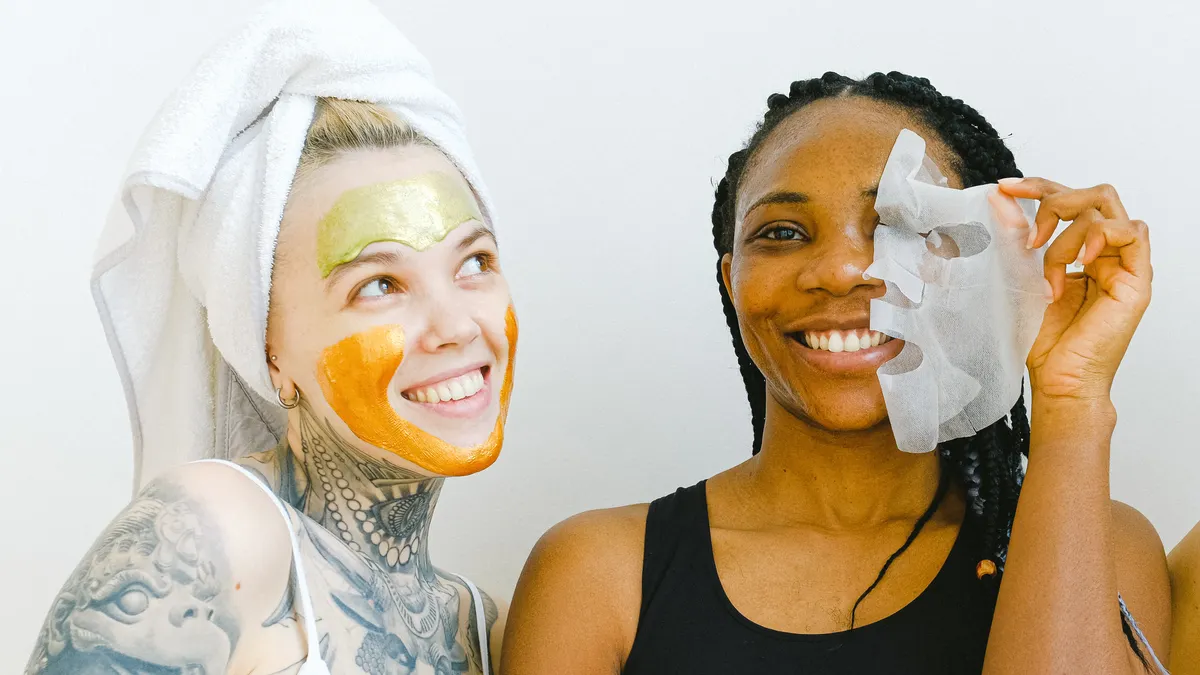
Cream or gel masks with humectants and barrier-supporting ingredients win for dry or dehydrated skin because they add comfort without adding friction. Look for glycerin, hyaluronic acid, panthenol, squalane, ceramides, and cholesterol. Those ingredients do not just “feel moisturizing”; they address the problem dry skin actually has, which is a shortage of water, lipids, or both.
This is the category most generic articles get wrong. They lump dry skin and dehydrated skin together, then recommend a thick occlusive for everything. That can help some faces, but it is not the full story. If the skin is only dehydrated, a richer blanket is not always necessary. A humectant-heavy gel mask can relieve tightness in 15 minutes and leave less residue than a heavy cream. If the skin is truly dry, a richer formula with lipids can reduce the chalky finish that appears around the nose, chin, and mouth.
The strength of this category is recovery. After a flight, a night in dry air, a run in cold wind, or a rough exfoliation day, a hydrating mask can restore pliability in a way a clay mask never will. It also pairs better with the rest of a routine because it is less likely to fight your moisturizer or sunscreen the next morning.
The weakness is that “hydrating” does not always mean “enough.” A watery gel mask with lots of fragrance but little lipid support may feel pleasant for 5 minutes and then disappear. A thick cream mask can be better on paper but feel too heavy under sunscreen if you use it at the wrong time. That is the trade-off: comfort now versus residue later.
This option is wrong for someone whose main issue is oil and congestion. It is also not the best fit if you need a fast visual reset before photos and want the face to look tighter rather than plumper.
My recommendation: pick gel or cream masks for tightness, flaking, post-travel dehydration, and “my skin feels thirsty” days. If you also clog easily, choose a lighter formula without heavy fragrance and use it for 10 to 15 minutes instead of sleeping in it.
What should you use for dullness, texture, or roughness?
An exfoliating mask wins for dullness and rough texture when the skin is healthy enough to tolerate it. AHAs such as glycolic acid and lactic acid target the surface layer where dead cells build up; enzymes can do a gentler version of the same job; BHAs like salicylic acid help when roughness overlaps with congestion. This is the category for people who want a brighter look, not just more moisture.
The benefit is visible. Rough patches around the nose, a tired-looking forehead, and makeup that clings to dry spots can improve after one controlled use. If the skin is normal to oily and not sensitized, an exfoliating mask can make everything else in the routine sit better. Sunscreen tends to lie flatter. Foundation tends to grip less unevenly. That is why people reach for these masks before a night out or a week of photos.
- Use exfoliating masks sparingly if you already use retinoids or acne treatments.
- Stop if the skin feels hot, stingy, or unusually tight.
- Choose enzyme masks first if you want a gentler introduction.
- Save stronger acid masks for skin that already tolerates exfoliation well.
The cost is that they can backfire faster than almost any other mask type. A 10-minute acid mask that is perfect on resilient skin can be too much for someone who already uses a retinoid, a benzoyl peroxide wash, or a scrub. Overuse can lead to stinging, redness, and a shiny-but-irritated finish that looks worse than the original dullness. That is the trade-off the beauty aisle rarely says out loud: a brighter surface can come at the price of a weaker barrier.
This category is not for every week, and it is not for compromised skin. If your face burns after a mild cleanser, skip exfoliating masks entirely until the barrier recovers. If your concern is only dryness, exfoliation is the wrong tool.
My position is clear: use an exfoliating mask only when dullness is the main complaint and your skin already tolerates acids well. One session can be useful; repeated sessions are where mistakes happen. If you need a safer version, an enzyme mask is usually the gentler first move.
When does an overnight mask beat a wash-off mask?
An overnight mask wins when the goal is recovery, not a quick visual fix. Leave-on sleeping masks are usually better for comfort, softness, and morning bounce because they stay in contact with the skin for hours rather than 10 to 20 minutes. That longer window matters when the barrier is stressed from travel, weather, retinoids, or plain dryness.
The case for overnight masks is simple: they fit the skin’s slow repair phase. A formula with humectants and emollients can reduce the “paper skin” feeling by morning, especially when used after a gentle cleanse. They are also convenient. There is no rinse-off step, no timer, and no risk of forgetting the product on your face for 45 minutes while answering emails.
The downside is that overnight does not automatically mean better. A rich leave-on can pill under moisturizer or pillow friction, and some people wake up with a greasy film that they do not like. If a formula is heavy in fragrance or contains an ingredient your skin dislikes, leaving it on for 8 hours magnifies the problem. That matters if your skin is reactive.
Overnight masks also are not the strongest choice for immediate pore work. If you want less shine by dinner, a wash-off clay mask usually outperforms a sleeping mask. If you want the skin to feel softer by morning, the overnight format is the better bet.
This option is wrong for anyone who wants fast visible tightening, a clean matte finish, or a no-residue routine. It is also not a smart choice if your pillowcase, bedding, or acne-prone skin reacts badly to richer textures.
My recommendation: choose an overnight mask for dryness, post-treatment comfort, and low-effort recovery. Do not use it as a substitute for a targeted acne or exfoliation step when those are the real needs. For skin-care basics on irritation and barrier care, the AAD and Cleveland Clinic both offer straightforward overviews. AAD and Cleveland Clinic.
The honest side-by-side
The right choice changes with the moment. Here is the decision grid I would use if I had to pick one mask for a specific skin need and use case.
| Criteria | Clay / sulfur mask | Hydrating cream / gel mask | Winner for this condition |
|---|---|---|---|
| Best for excess oil | Absorbs surface oil quickly; often the strongest visible matte effect in 10–20 minutes | Usually adds comfort, not oil control | Clay / sulfur mask |
| Best for tight, thirsty skin | Can feel stripping if left on too long | Adds water-binding ingredients like glycerin or hyaluronic acid | Hydrating cream / gel mask |
| Best after a rough flight or dry weather | Usually not the best fit | Often the better recovery option for 1 night use | Hydrating cream / gel mask |
| Best for visible congestion | Useful when pores are oily and clogged | Less direct effect on congestion | Clay / sulfur mask |
| Best for reactive or sensitized skin | Higher irritation risk, especially with fragrance or acids | Usually safer if the formula is plain and fragrance-light | Hydrating cream / gel mask |
| Best for makeup prep | Can improve grip if the T-zone is shiny | Can smooth dry patches and reduce cakiness | Depends on the problem area |
| Best for immediate visual change | Stronger matte, cleaner-looking finish | Softer, plumper, less dramatic change | Clay / sulfur mask for oil; hydrating mask for dehydration |
| Best contact time | Usually 5–15 minutes, depending on formula | Often 10–20 minutes or overnight if it is a leave-on mask | Depends on the schedule |
| Biggest drawback | Can over-dry and trigger irritation | Can feel heavy or not strong enough for oil control | Neither is universal |
- If oil is the issue, start with clay or sulfur.
- If tightness is the issue, start with hydration.
- If both are true, choose by zone and by time of day.
- If the barrier is irritated, simplify first and mask later.
This table is the cleanest answer to the question most readers are really asking: what works for my face, right now? If your skin is oily and congested, the clay path wins. If your skin is tight, flaky, or travel-worn, the hydrating path wins. If your skin is mixed, the winner can change by zone and by day.
Which mask should you choose before a big event, after sun, or on a bad-skin day?
The best mask before a big event is the one that fixes the visible problem without creating a new one. That sounds obvious, but it is where people make the most expensive-looking mistakes. A 15-minute clay mask before a party can be excellent if the forehead is shiny. The same mask can leave cheeks looking flat, dusty, and hard to blend. A hydrating mask can rescue makeup on a dry face, but if it is too rich, it can make foundation slide by hour two.
After sun exposure, the safe choice is not a brightening or exfoliating mask. It is a bland, soothing, hydration-first formula, and if the skin is burned or blistered, a mask may be the wrong step entirely. Gentle cooling, basic moisturizer, and shade are the smarter response. Skin that is red from sun should not be challenged with acids or clay. If the reaction is severe, medical advice is the right move, not a cosmetic routine.
On a bad-skin day, the real question is what kind of bad day it is. If the face is oily and congested, a short clay mask can help the surface look cleaner. If the face is inflamed, flaky, or over-treated, the best mask may be no mask at all. A simple moisturizer can beat a fancy product when the skin barrier is already talking back.
This is where many generic guides fail. They treat the mask as the hero in every scene. Sometimes the hero is restraint. Sometimes the best performance comes from not adding another active at all.
My position: for events, use a targeted mask only if it solves a visible problem you know will matter in photos or under makeup. After sun or irritation, skip the category that can sting. If the face is actively angry, a mask is often the wrong tool.
Exception scenarios that can flip the verdict
There are a few cases where the normal recommendation changes fast.
First, if your skin is oily but dehydrated, a hydrating mask can outperform a clay mask even when shine is the complaint. That sounds counterintuitive, but it happens when the skin is producing oil because it feels stripped. A clay mask may make the surface look better for 30 minutes and the rebound oil worse later. In that situation, a light gel mask with glycerin is the smarter move.
Second, if your skin is dry but clogged, a pure cream mask may not be enough. Dry skin can still have congestion, especially along the jaw or nose. A gentle enzyme mask used sparingly can be more useful than adding more occlusion. The key is restraint: one session, not a weekly peel-off habit.
Third, if you use retinoids or prescription acne treatments, the most aggressive mask may be the worst mask. That includes strong acids, sulfur-heavy formulas, and anything with a long list of irritants. Barrier support beats “treatment” when the routine already contains active therapy.
Fourth, if the skin is sensitive, rosacea-prone, or eczema-prone, the simplest formula can win outright. A fragrance-free cream mask or even a plain moisturizer is often safer than any specialty product. If you have a diagnosed skin condition, it is worth checking with a dermatologist before layering in acids, sulfur, or leave-on actives.
Those exceptions matter because they are the difference between a mask that helps and a mask that starts a week-long repair cycle.
The verdict: which mask to choose and why
Choose a clay or sulfur mask if your main problem is oil, congestion, or a shiny T-zone before a specific event. Choose a hydrating cream or gel mask if your main problem is tightness, dryness, travel stress, or post-treatment discomfort. Neither if your skin is burning, peeling, sunburned, or already irritated from actives; in that case, skip the mask and use a plain, fragrance-light moisturizer instead.
That is the cleanest answer because mask performance is really about matching mechanism to need. Clay removes what sits on the surface. Hydrating masks replace what the skin lacks. Exfoliating masks brighten when the barrier can handle it. Overnight masks help recovery over time. The wrong choice is not harmless, and the best-looking product on the shelf is not always the right one for tonight.
If I had to reduce the whole guide to one rule, it would be this: use the strongest mask your skin can tolerate only when the goal calls for that strength. Anything harsher is not better; it is just more likely to backfire.
Drafted with AI; not yet reviewed by a person.

Leave a Reply