


Last updated: October 29, 2026
Key Takeaways
- Sensitive skin does better with short ingredient lists, low-irritation formulas, and barrier support.
- For a face mask, colloidal oatmeal, ceramides, centella asiatica, madecassoside, and allantoin are common soothing picks.
- Sensitive skin should usually avoid fragrance, drying alcohols, and strong exfoliating acids in leave-on or rinse-off masks.
- A calm, barrier-friendly face mask matches skin tolerance before it matches a trend.
Quick Answer

A sensitive face usually does best with colloidal oatmeal, ceramides, centella asiatica, madecassoside, and allantoin. For best ingredients in face masks for sensitive skin, those are the names to look for first. A fragrance-free mask with one or two of them is usually a safer bet than a crowded formula loaded with actives. Burns, stings, or eczema? Patch test first, then speak with a dermatologist or other professional if reactions keep happening. See the American Academy of Dermatology and the National Eczema Association for guidance.
Sensitive-skin face mask ingredients should calm, cushion, and protect the skin barrier, not tingle, sting, or leave the cheeks red for an hour. Fragrance-free formulas built around colloidal oatmeal, ceramides, centella asiatica, madecassoside, and allantoin are usually the safest starting point; perfume and alcohol are the usual troublemakers.
What sensitive skin needs from a face mask ingredient list
Sensitive skin needs a short ingredient list, a low-irritation formula, and barrier support. So the goal is not a dramatic “treatment” feeling; it is less heat, less tightness, and fewer surprises. If your skin is highly reactive, a dermatologist can help narrow the field.
Ten to 15 minutes is the test. After that, skin should feel quieter, not stripped. That matters because sensitive skin often reacts to fragrance, drying alcohols, or a pile of active ingredients all at once. A mask can look gentle on the front label and still be rough in practice if the formula is overloaded.
Honestly, I would start with a blunt rule: the shorter and plainer the ingredient list, the easier it is to spot trouble. A mask built around one or two soothing ingredients and a basic humectant base usually beats a packet that promises brightening, exfoliation, pore clearing, and glow all at once. That kind of promise is often snake oil in a pretty wrapper.
Two authoritative references help with the basics of irritant avoidance: the American Academy of Dermatology’s guidance on sensitive skin and the National Eczema Association’s ingredient advice. Both stress that fragrance is a common trigger and that bland, barrier-friendly formulas are usually the safer route. When a product leans on perfume or a long list of botanical extracts, I treat that as a yellow flag.
The main judgment here is simple: comfort-first ingredients usually beat “results” ingredients that create a sensation. That does not make the mask boring. It makes it usable.
Which ingredients are best for sensitive skin in a face mask?
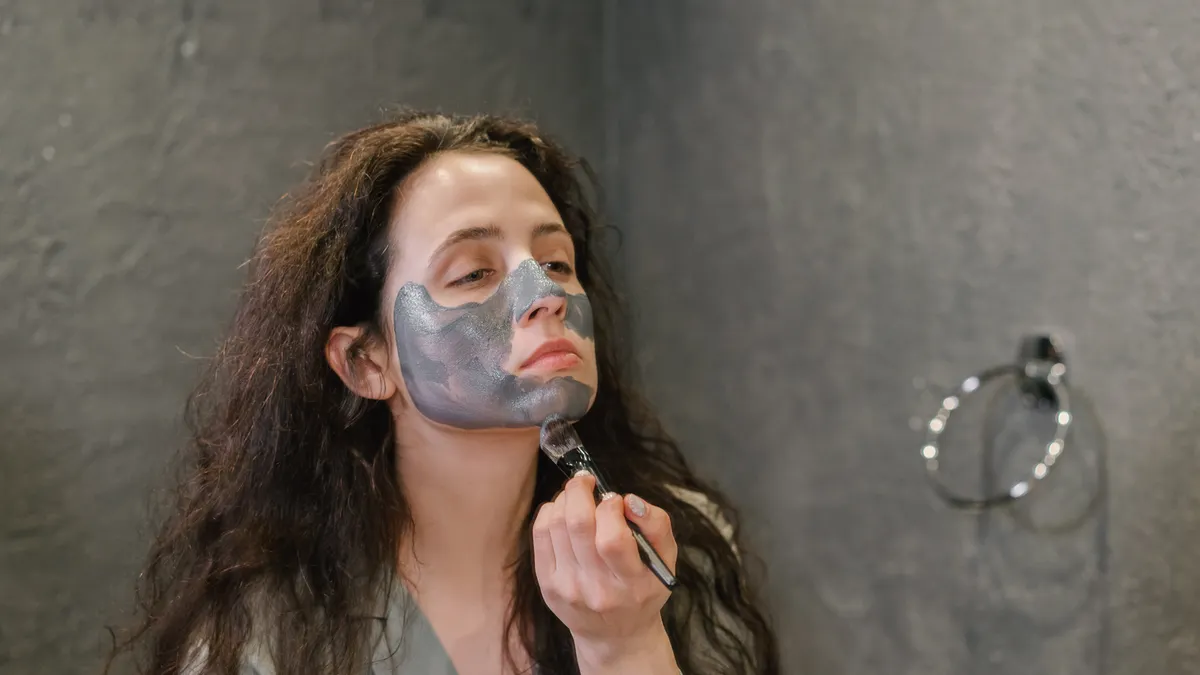
The best ingredients for sensitive skin in a face mask are colloidal oatmeal, ceramides, centella asiatica, madecassoside, and allantoin. Those are the first five I would scan for if skin is reactive, easily flushed, or prone to stinging.
Colloidal oatmeal is one of the strongest starting points. It is the finely milled form of oats used in skin care to help soothe irritation and support the skin barrier. A mask with colloidal oatmeal usually signals a formula built for calm rather than resurfacing. For people who know oats trigger them, though, this is the main exception to watch.
Ceramides are another good sign. They are lipids that help support the skin barrier, which matters when skin feels dry, tight, or touchy after cleansing. In a face mask, ceramides are not a quick “fix,” but they can make a formula feel more protective and less stripping. They sit well with simple hydrators and are often the better pick than masks packed with acids or scrubs.
Centella asiatica works when skin wants calm without heaviness. It is a plant extract often used in soothing formulas, and it shows up a lot in masks marketed for stressed or red-looking skin. The related compound madecassoside is one of the key centella-derived ingredients to look for. If centella appears, that is good; if madecassoside appears too, even better. That combination is a solid signpost.
Allantoin is another quiet helper. It softens the feel of the formula and supports comfort, which is exactly what sensitive skin needs from a mask. It does not shout on a label, but it does useful work.
A good mask for sensitive skin often combines two of these ingredients rather than relying on only one. For example: colloidal oatmeal for comfort, ceramides for barrier support, and madecassoside or allantoin for extra soothing. That sort of pairing is more practical than a formula that tries to do everything and ends up doing too much.
What ingredients should sensitive skin avoid in masks?
Sensitive skin should usually avoid fragrance, drying alcohols, and strong exfoliating acids in a leave-on or rinse-off mask. Those ingredients are the ones most likely to turn a calm face into a red, hot, or itchy one in minutes.
Fragrance is the biggest repeat offender. That includes added parfum, perfume, and heavily scented essential oils. A mask can smell like lavender, citrus, rose, or vanilla and still be a poor choice if your skin reacts easily. “Natural” fragrance is not safer by default. Essential oils are still fragrance, and they still can irritate.
Drying alcohols are another common problem, especially when alcohol denat or denatured alcohol sits high on the ingredient list. Some alcohols are fatty alcohols and are not the issue here; the short-chain drying kind can leave skin feeling tight and raw. If a mask dries fast on the skin or leaves a squeaky finish, that is often a bad sign for sensitivity.
Strong acids can also be too much. That means peels and exfoliating masks built around alpha hydroxy acids or beta hydroxy acids. A sensitive face may tolerate them occasionally, but this page is about calming ingredients, not treatment masks. If the main point of the product is to exfoliate, it belongs on another shelf. If your skin is reactive, a clinician can help decide whether acids belong in your routine at all.
Masks with a long list of botanical extracts can be tricky too. A plant-heavy formula is not automatically bad, but every extra extract is another possible irritant. For a reactive face, “simpler” beats “more natural.” The same goes for cooling additives and strong tingling sensations. If a mask makes your skin feel fresh in the first 60 seconds, that sensation is often irritation, not benefit.
The practical takeaway is blunt: if fragrance, alcohol, or strong acids are near the top of the list, look for another option. Sensitive skin usually rewards restraint.
How to choose a calm, barrier-friendly face mask
A calm, barrier-friendly face mask is one that matches the skin’s tolerance before it matches a trend. The quickest way to choose one is to scan the ingredient list in 30 seconds and rule out the obvious irritants first.
Start with the front of the package, then flip it over. Look for the words fragrance-free and alcohol-free. Those two labels do not guarantee a perfect formula, but they remove two common sources of trouble. Then scan for one or more ingredients that actually help sensitive skin: colloidal oatmeal, ceramides, centella asiatica, madecassoside, or allantoin.
Here is a simple way to choose:
- Check for fragrance-free on the box or packet. If the product is scented, skip it unless you already know your skin tolerates fragrance well.
- Look for alcohol-free or scan the ingredient list for denatured alcohol, alcohol denat, or ethanol near the top of the list. If it is high in the list, move on.
- Find a soothing ingredient you recognize, such as colloidal oatmeal or centella asiatica, so the product has a clear purpose.
- Look for barrier support like ceramides, especially if the skin feels tight after washing.
- Keep the formula simple. A mask with 10 to 20 ingredients is often easier to judge than one with a long, crowded list.
- Patch test on a small area, such as the jawline or behind the ear, for 24 hours before using it on the whole face. If redness or itching shows up, do not push through.
The trade-off is plain formulas can feel less dramatic. They may not tingle, brighten instantly, or smell luxurious. Fine. That is the point. A mask that stays calm on the skin is doing the job sensitive skin actually needs.
If the skin has a history of eczema, frequent burning, or rash-like reactions, patch testing matters even more. If a product causes repeated stinging, stop using it and ask a dermatologist for advice before trying another formula.
Ingredient combinations that usually work better than one-star heroes
The best sensitive-skin masks usually pair a soothing ingredient with a barrier ingredient, not a dozen actives. That combination is steadier and often easier for reactive skin to tolerate.
One strong pairing is colloidal oatmeal plus ceramides. Oatmeal helps soothe the surface feel, while ceramides support the barrier underneath. That kind of formula is useful when skin feels hot after cleansing or dry after weather changes. It is not flashy; it just works.
Another useful combination is centella asiatica plus madecassoside. Both show up in calming formulas, and madecassoside is especially common in masks aimed at reducing the look of stressed skin. This pairing suits people who want something light but still comforting. It keeps the drama off the face.
Allantoin also works well as part of a supporting cast. It does not need to be the headline ingredient. In a sheet mask or cream mask, it can help the formula feel less sharp on the skin, especially when the rest of the ingredients stay simple.
What does not work as well is stacking multiple “active” features into one product. A mask that combines acids, fragrance, minty cooling agents, and brightening claims is asking too much from sensitive skin. Even if each ingredient is harmless in isolation, the formula can still become irritating as a whole.
A plain cream mask with oatmeal and ceramides may look less exciting than a high-tech jelly mask with ten extracts, but it is usually the smarter choice. Sensitive skin tends to prefer predictable formulas over novelty.
One more point matters here: if the ingredient deck includes a long list of fruit extracts, essential oils, or perfume ingredients, the formula is drifting away from the calm category. That is a sign to keep shopping.
Common mistakes that make sensitive skin react
The most common mistake is choosing a mask because it feels “clean,” “botanical,” or “fresh,” then ignoring fragrance and alcohol. That can cost you a night of redness or stinging, which is avoidable with a 20-second label check. The fix is to prioritize formula behavior over marketing language.
A second mistake is using a mask after scrubbing or exfoliating the same day. That stacks irritation on irritation. If the skin has already been polished, peeled, or cleansed aggressively, even a gentle mask can sting. A better move is to save the soothing mask for a day when the skin has been left alone.
A third mistake is leaving the mask on longer than directed because “more time should help.” Most sheet masks and cream masks are meant for around 10 to 20 minutes, and stretching that into 30 minutes or longer can dry the skin or increase irritation, especially if the mask starts to dry on the face. Follow the package time, then rinse or remove it as directed.
A fourth mistake is assuming that a product labeled for sensitive skin is automatically safe. That label is a starting point, not a guarantee. The ingredient list still matters more than the marketing.
Finally, people sometimes mix too many soothing products at once. A calming mask, a rich balm, a heavy occlusive, and a new serum on the same night can make it hard to tell what the skin actually tolerates. One change at a time is cleaner and easier to read.
If skin reacts with swelling, burning, or a rash that lasts beyond the next day, stop using the product and speak with a dermatologist. That kind of reaction is a signal, not a test to push through.
What I would prioritize on the label, in order
I would put fragrance-free first, then alcohol-free, then the soothing ingredients that do the real work. That order matters because it knocks out the most common sources of trouble before you start shopping for benefits.
If I were scanning a shelf, I would read labels in this order:
- No added fragrance or perfume
- No drying alcohol near the top of the list
- One calming ingredient: colloidal oatmeal, centella asiatica, madecassoside, or allantoin
- One barrier ingredient: ceramides
- A short, plain formula overall
That ranking is useful because it keeps the decision practical. A mask does not need to contain every soothing ingredient to be worth buying. It needs a formula that your skin can actually tolerate for 10 to 15 minutes.
The ingredient that does the least visible work can still matter most. Ceramides will not give you a dramatic before-and-after moment, but they matter when skin is prickly, flaky, or overworked. Colloidal oatmeal is similar. It is not glamorous, but it is one of the most useful ingredients for a reactive face.
The limit here is simple: sensitive skin is personal. One person may love a centella mask and react to oats. Another may handle oatmeal but not a scented cream base. That is why there is no universal winner, only a better starting list.
For a broader view of formulas and textures, the hub on types of face masks for skin can help narrow the format before you pick the ingredients.
What ingredients are best for sensitive skin in a face mask?
The best ingredients are colloidal oatmeal, ceramides, centella asiatica, madecassoside, and allantoin. They are chosen because they tend to calm the skin and support the barrier without adding much sensory irritation. A simple, fragrance-free formula built around one or two of these is usually a better fit than a mask full of actives and perfume.
What ingredients should sensitive skin avoid in masks?
Sensitive skin should usually avoid fragrance, essential oils, and drying alcohols such as alcohol denat or ethanol when they appear high on the ingredient list. Strong exfoliating acids can also be too much for reactive skin. If a mask smells strong, tingles fast, or promises a big “fresh” effect, it is worth skipping. For ingredient-specific questions, the American Academy of Dermatology and the National Eczema Association are useful starting points.
Are sheet masks safe for sensitive skin?
Yes, sheet masks can be safe for sensitive skin if the formula is plain and fragrance-free. The safest versions tend to be short on ingredients and focused on soothing compounds like oatmeal, centella, or ceramides. I would still patch test first, because the sheet material and the serum can both trigger a reaction in some people.
Drafted with AI; not yet reviewed by a person.


Leave a Reply