


Last updated: October 29, 2026
Key Takeaways
- Start with clean skin, then apply the mask, time it properly, and remove it gently.
- A face mask routine works best when you match the product, thickness, timing, and removal method to the formula.
- Clean skin helps most masks sit evenly, because oil, sunscreen, and makeup can block contact.
- Follow the package time, usually 5 to 20 minutes, and do not leave the mask on just because it still feels comfortable.
A face mask works best when the skin is clean, the product is applied in an even layer, and the timing matches the format, not the clock on the bottle alone. For a quick answer on how to use a face mask correctly at home, cleanse first, apply the mask, leave it on for the stated minutes, remove it cleanly, then finish with toner, moisturizer, and sunscreen in the morning.
What you need before you start
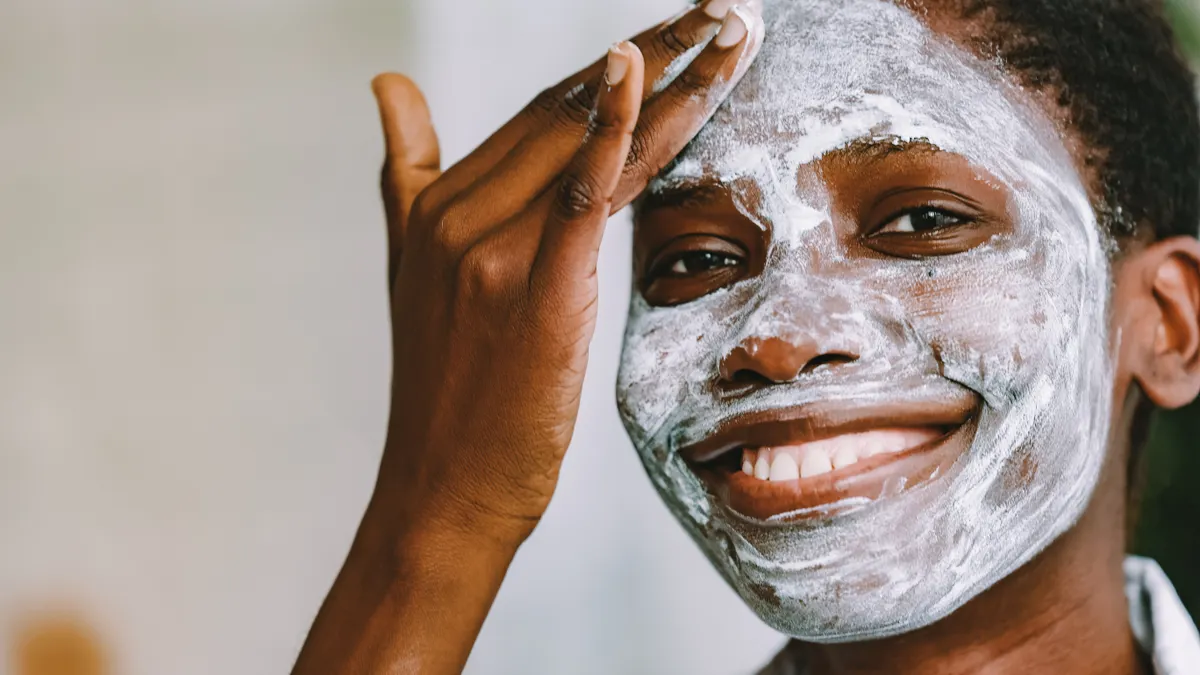
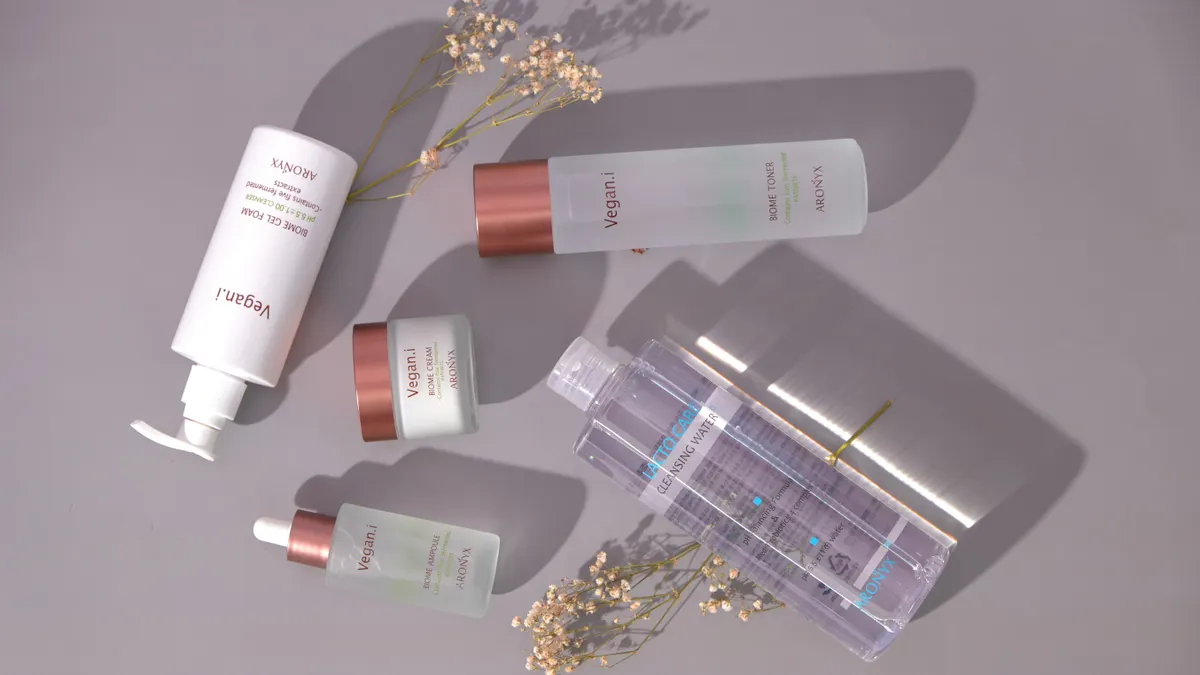
A correct face mask routine starts with the right setup, not the mask itself. Have a cleanser, a clean towel, the face mask, lukewarm water, and your follow-up products ready before you open the packet or jar. For sheet masks, have clean hands and, if needed, scissors to trim the eye or nose openings. For wash-off clay, cream, or gel masks, a flat brush or clean fingers works; for peel-off masks, apply directly from the tube in a thin layer.
Patch test first if the product is new to you or if your skin reacts easily. If a clinician has given you specific instructions, follow those instead. Redness, itching, burning, or swelling means stop and do not use it on your face. One extra day is dull, but it can spare you a full-face flare-up.
This is also the point to check the label for the mask type and stated time, which is usually 5, 10, 15, or 20 minutes depending on the format. A sheet mask is not treated the same way as a clay mask, and a peel-off mask should not be left on until it feels “extra dry”; if you are unsure, follow the label or ask a professional. If the instructions are unclear, use the shorter end of the range rather than guessing.
For readers comparing formulas, the hub on types of face masks for skin fits here; this page stays focused on application, not choosing the product.
How do you use a face mask step by step?
Use a face mask by cleaning the skin, applying the product in the right thickness, timing it correctly, and removing it without rubbing. The routine is short, but each step matters. For how to use a face mask correctly at home, here is the order that keeps the process tidy and lowers the chance of irritation.
- Wash your face with a gentle cleanser and rinse with lukewarm water, about 30 °C to 35 °C (86 °F to 95 °F). Pat dry with a clean towel. The skin should feel clean but not tight or squeaky.
- Put on the mask in an even layer or place the sheet mask so it lies flat. Avoid the eyelids, the lash line, the lips, and any broken skin. You want full coverage without a thick ridge at the edges.
- Leave it on for the time on the package, commonly 5 to 20 minutes depending on the format. Set a timer. When it works, the sheet still feels comfortably damp, or the wash-off mask has had time to set without cracking hard.
- Remove the mask the way its format calls for: peel off a sheet mask, rinse off a clay or cream mask with lukewarm water, or lift away a peel-off mask from the edges in one smooth motion. If it resists, stop tugging and soften it with water.
- Apply the next products while the skin is still slightly damp. A toner, then moisturizer, helps seal in water; in the morning, finish with sunscreen. The skin should feel calm, not sticky or stripped.
A mild tingle can happen with some formulas, but it should not become burning, strong stinging, or fast redness. If that happens, remove it early and rinse well. That reaction is a sign the product is too strong, the skin barrier is unhappy, or the mask stayed on too long.
Do you wash your face before a mask?
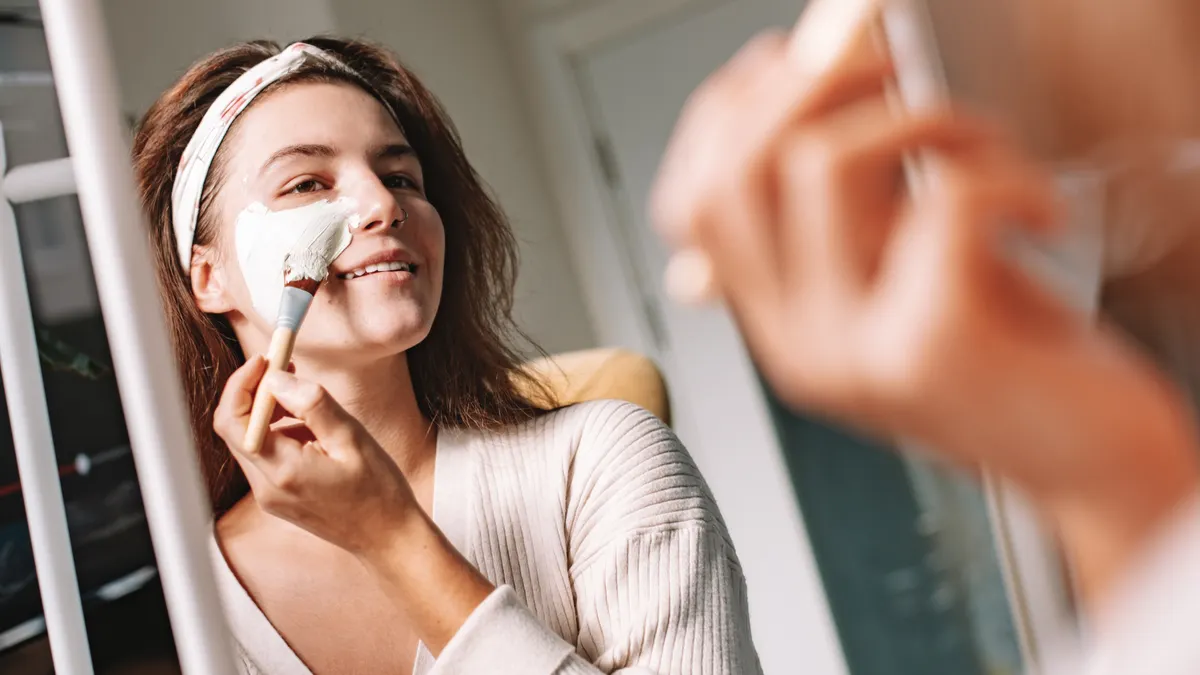
Yes, the face should be cleaned before almost any mask, because oils, sunscreen, and makeup block even contact with the skin. A cleanser does the job better than water alone. If the face is heavily made up, remove makeup first, then cleanse once more so the surface is actually clean.
This matters most for clay masks, cream masks, and exfoliating masks. A sheet mask also goes on cleaner skin, but you do not need to scrub first. Scrubbing, brushes, and hot water can make the skin more reactive, especially if the mask already contains acids or other active ingredients. Lukewarm water around 30 °C to 35 °C (86 °F to 95 °F) is enough.
Do not use a face mask as a replacement for washing. A mask sits on top of the skin; it does not remove daily grime the way a cleanser does. If you skip cleansing, the mask can slide, clump, or sit on top of residue instead of making even contact. That usually means less benefit and more mess.
The order in a normal routine is simple: cleanser first, then mask, then toner if you use one, then moisturizer, and sunscreen in daytime. If the skin feels very dry after cleansing, use a gentler cleanser next time rather than shortening the mask time to make up for it. The mask should not be asked to fix a rough cleansing step. For more on the cleansing step, see how to cleanse skin before a face mask.
How long should you leave a face mask on?
Leave a face mask on for the time written on the package, usually 5 to 20 minutes, and do not stretch it just because the skin still feels comfortable. The product is designed for a specific contact time, and longer is not automatically better. Different formats have different limits.
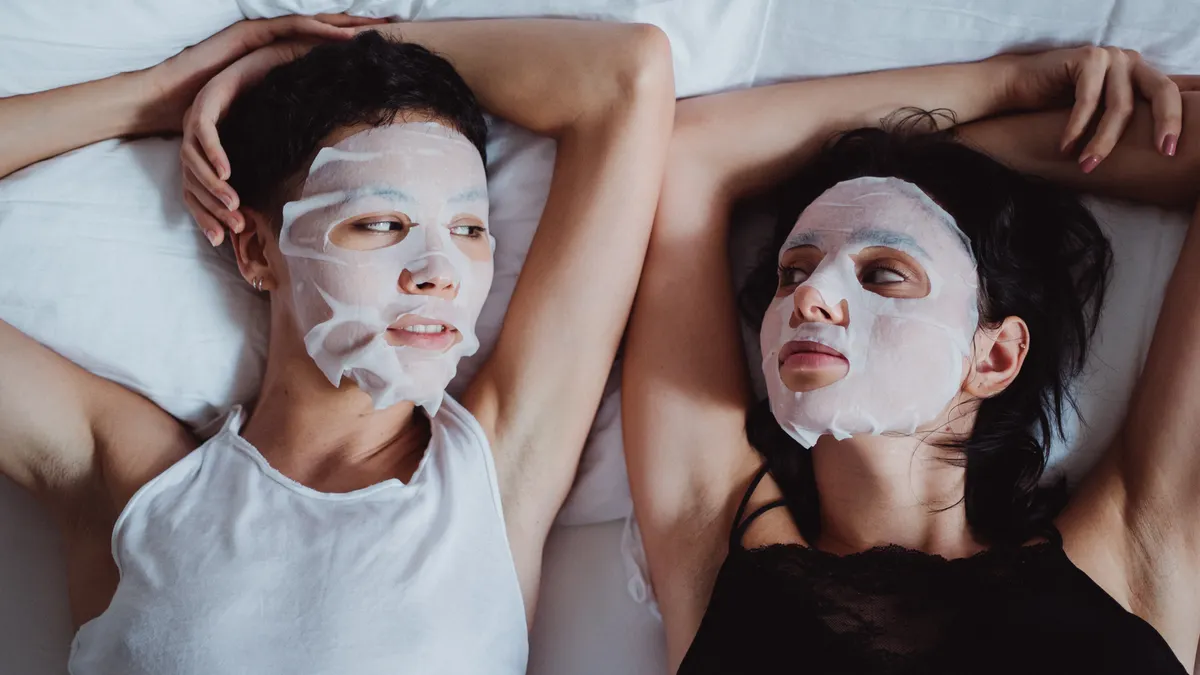
A sheet mask is often used for about 10 to 20 minutes. Once the sheet starts drying out, it can pull moisture back from the skin rather than adding it. Clay masks commonly sit for 10 to 15 minutes, or until they are mostly dry but not cracked and chalky. Cream and gel masks are often left on for 10 to 15 minutes, though some are made to stay longer. Peel-off masks should dry fully, but not so long that they become difficult to remove.
The better sign than a clock alone is the mask’s condition. A sheet mask should still feel damp when you remove it. A clay mask should be dry enough to lift, but if it has gone hard and is flaking, it has stayed too long. A peel-off mask should come off in a flexible sheet. If it tears into tiny pieces, it was either too thin or too dry.
Leaving a mask on too long can cause tightness, irritation, or redness, especially on dry or sensitive skin. Wash it off early if the skin starts to sting, itch, or feel hot. That is the trade-off with most at-home masks: the longer wait looks efficient, but the skin may pay for it. If a label gives a range, choose the shorter end the first time. For a broader view, see face mask timing by formula.
How to remove the mask without irritating skin
Remove the mask gently and use lukewarm water or clean hands, not force. The goal is to get the product off without scrubbing away the skin’s surface or leaving residue that irritates later. The removal method depends on the mask format, so follow the label or ask a professional if the instructions are unclear.
Sheet masks come off by lifting the edges and peeling them away slowly. There is no prize for getting every last drop from the sheet by dragging it over the face. Use the leftover serum on the neck or backs of the hands if it suits the skin, but stop if it feels greasy or sticky.
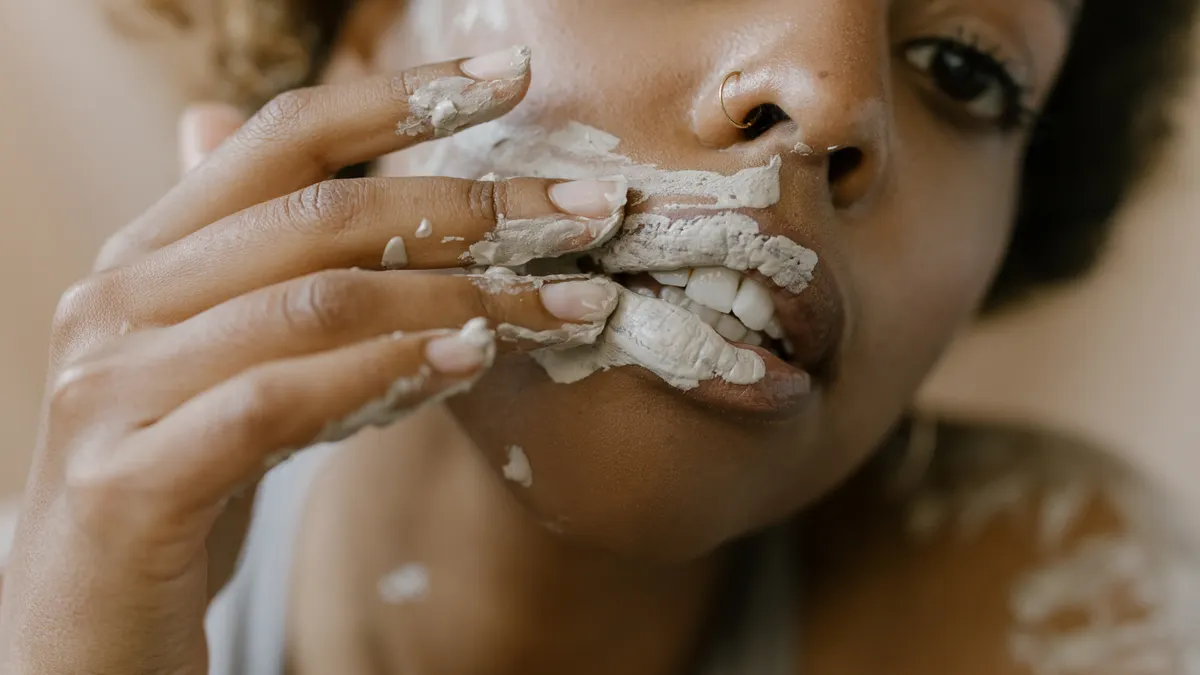
Clay, mud, and cream masks rinse off with lukewarm water. Splashing is better than rubbing. If the product has started to set, wet the fingertips first and loosen the edges before rinsing. A soft washcloth can help, but it should be clean and used with very light pressure.
Peel-off masks are the most likely to cause a poor result if they are used carelessly. Apply them thinly next time, avoid hairlines and eyebrows, and peel from the edges in one steady motion. If the mask clings to fine hair or feels painful, it is better to soften the residue with water than to rip harder.
After removal, the skin should feel clean and comfortable, not scrubbed raw. A little residue from a hydrating mask is normal. A tight, squeaky finish is not. If that happens often, the mask is probably too drying for the skin type or left on too long. For related tips, see how to remove a face mask gently.
What to put on after a face mask
After a face mask, apply toner if it is part of your routine, then moisturizer, and sunscreen in the morning. The skin is most receptive right after the mask comes off, so the next products should support that feeling instead of fighting it. This is where many good routines go wrong: the mask is used, then nothing follows.
A gentle toner can add a water-based layer if the skin likes it, but toner is optional, not mandatory. If your toner stings after a mask, skip it and go straight to moisturizer. Moisturizer matters more because it helps keep the skin from drying out again after cleansing and masking. Use enough to leave the face lightly cushioned, not slick.
In daytime, sunscreen is the last step. That matters even after a soothing or hydrating mask, because fresh skin still needs sun protection. If you mask at night, sunscreen can wait until morning, but the daytime routine should still include it the next day. A face mask does not replace that step.
There is one honest drawback here: layering too many products right after a mask can overwhelm skin that is already sensitive. If the face feels warm, flushed, or tender, keep the finish simple with moisturizer only. Skip strong actives for that night unless a clinician has told you otherwise. For a lot of people, the most useful post-mask routine is only two products long. See also what to put on after a face mask.
Common face mask mistakes that waste the product
The biggest mistake is using the wrong timing, and it usually costs comfort. Leaving a mask on longer than instructed does not double the benefit; it often just increases dryness or irritation. A timer on a phone solves that problem. If the label says 10 minutes, do 10 minutes, not 25 because the skin “felt fine.”
Another common error is applying too much product. Thick layers of cream, clay, or peel-off formula take longer to dry and can make removal messy. A thin, even layer works better for most formats. For sheet masks, smoothing out air bubbles matters more than piling on extra serum. More is not the goal; even contact is.
Using a face mask on dirty skin is another avoidable miss. Sunscreen residue, sweat, and makeup create a barrier that blocks the product from sitting evenly. Cleanse first, then mask. If the skin is very oily or coated with long-wear makeup, a single quick wash may not be enough.
A final mistake is treating every mask like a relaxing spa product. Some masks are cosmetic; some are more active and can dry or tingle. A person with eczema, a recent sunburn, broken skin, or a strong history of reactions should be cautious with any new formula and ask a professional if they are unsure. A mask is not worth making the skin angry for two days.
If the routine feels complicated, simplify it: cleanse, apply, time, remove, moisturize. That is the core. Everything else is detail.
When to skip a mask or ask for advice
Skip a face mask if the skin is cracked, sunburned, actively irritated, or reacting to another product already. Do not try to “calm it down” with a new formula. New product on already upset skin is a bad bet, especially with peel-off, exfoliating, or strongly fragranced masks. Wait until the skin is stable again.
Patch testing is smart before the first use of a new mask, especially on the face where reactions are more noticeable. A 24-hour patch test is not glamorous, but it is a practical way to catch irritation before it spreads across the whole face. If a mask burns during the test, it does not belong on the face.
If there is persistent redness, swelling, hives, or a rash after using a mask, stop using it and speak with a pharmacist, dermatologist, or other qualified clinician. That is especially true if the reaction is severe or keeps coming back with different products. This article covers routine home use, not diagnosis or treatment, and a clinician can help if the reaction does not settle.
For most people, at-home masking is simple enough to do safely. The trouble starts when the product is rushed, left on too long, or used on skin that already needs care. The safest habit is often the least dramatic one: follow the label, keep the routine short, and listen to the skin when it says no.
How long should you leave a face mask on?
Leave it on for the time stated on the package, usually 5 to 20 minutes depending on the format. A sheet mask is often removed while still damp, while clay masks and peel-off masks have their own limits. If the skin stings, it is better to take it off early than to “push through.”
Do you wash your face before a mask?
Yes, you should wash your face before using a face mask. Cleansing removes sunscreen, makeup, and oil so the product touches clean skin instead of sitting on top of residue. Use a gentle cleanser and lukewarm water, then pat the face dry before applying the mask.
How often should you use a face mask?
Use a face mask as often as its label and your skin tolerate, because the right frequency depends on the type of mask and the person using it. A hydrating sheet mask is not treated the same way as a clay or exfoliating mask. If the skin becomes dry, tight, or irritated, space it out more.
Drafted with AI; not yet reviewed by a person.
Leave a Reply